Philippines Ferry Disaster Claims 29 Lives as Entire Fleet Grounded
The death toll from the MV Trisha Kerstin 3 ferry
disaster has climbed to 29, Philippine Coast Guard officials confirmed
Thursday, as search teams recovered 11 additional bodies from waters near
Baluk-Baluk Island where the vessel sank in the early hours of Monday, 26
January.
The escalating tragedy has triggered an
unprecedented government response, with Transport Secretary Giovanni Lopez
ordering the immediate grounding of the entire passenger fleet operated by
Aleson Shipping Lines, the vessel’s owner, citing 32 prior safety incidents
involving the company since 2019.
The roll-on/roll-off passenger ferry departed
Zamboanga City at 21:20 local time on Sunday evening, bound for Jolo in Sulu
province with 314 passengers and 27 crew members aboard. The vessel, which had
a maximum authorized capacity of 352, issued a distress call at 01:50 Monday
morning, approximately four hours into its journey, after strong waves flooded
its lower deck.
According to survivors and crew accounts, vehicle
lashings securing cars on the lower deck snapped as waves battered the vessel,
causing the vehicles to shift and the ferry to list sharply to starboard. The
vessel capsized and sank approximately 2.75 nautical miles northeast of
Baluk-Baluk Island in Basilan province, settling in 76 metres of water.
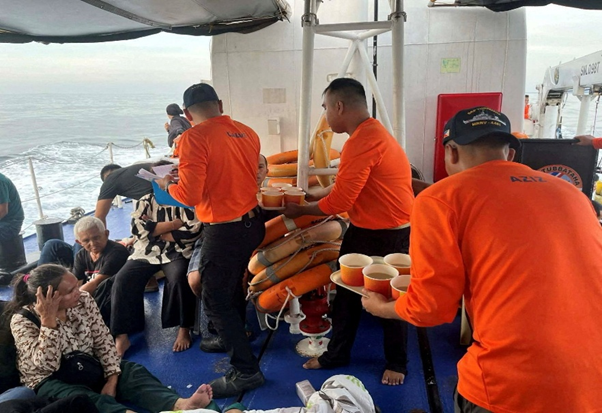
The immediate rescue response brought together
coastguard cutters, naval vessels, Air Force Black Hawk helicopters, commercial
craft and local fishing boats. In challenging nighttime conditions, rescuers
managed to save 316 people from the water. Many survivors described being
thrown into the sea without warning as the vessel rapidly capsized, scrambling
to find life jackets and flotation devices in darkness and confusion.
“No one from the crew alerted us,” survivor and
lawyer Aquino Sajili told reporters. The 53-year-old described passengers
racing to one side of the tilting ship in a desperate attempt to rebalance it
before hearing “a loud snap” that preceded the vessel’s rapid sinking.
Survivors then spent hours in the water awaiting rescue...The government’s
decision to ground Aleson Shipping Lines’ entire passenger fleet represents one
of the most severe regulatory actions taken against a Philippine ferry operator
in recent years. Acting Transport Secretary Lopez announced the suspension at a
Tuesday press conference, revealing that the company had been involved in 32
maritime incidents over seven years.
“Maritime safety is not negotiable; it is not
optional,” Lopez told reporters. “Business considerations are just secondary.
Maritime safety will always be the paramount and primordial concern.”
The suspension has created immediate disruption for
thousands of daily commuters, traders and patients requiring medical care in
Zamboanga City from the island provinces of Basilan and Sulu...The proximity of
both disasters to Baluk-Baluk Island and the identical route has intensified
scrutiny of both the operator’s procedures and government oversight of the
domestic shipping sector.
President Ferdinand Marcos Jr. has ordered a full investigation into the
latest sinking, with Lopez directing the Maritime Industry Authority and Coast
Guard to complete a comprehensive maritime safety audit of Aleson’s fleet and
crew within 10 days...Ferry accidents remain a persistent safety challenge in
the Philippines, where more than 7,000 islands necessitate extensive
inter-island shipping for millions of passengers annually...Whether the tragedy
becomes a catalyst for genuine reform in Philippine maritime safety or simply
another entry in a long chronicle of preventable disasters will depend on how
decisively authorities act on the investigation’s findings and whether
enforcement mechanisms can finally match the regulatory standards already on
the books.
Related News