

Office Address
123/A, Miranda City Likaoli Prikano, Dope
Phone Number
+0989 7876 9865 9
+(090) 8765 86543 85
Email Address
info@example.com
example.mail@hum.com


123/A, Miranda City Likaoli Prikano, Dope
+0989 7876 9865 9
+(090) 8765 86543 85
info@example.com
example.mail@hum.com
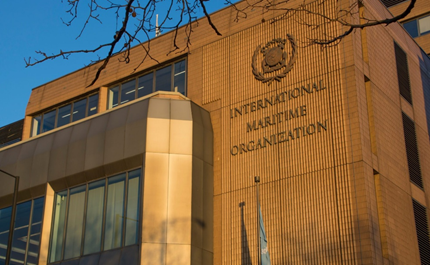
At the 13th session of the IMO’s Sub-Committee on
Pollution Prevention and Response member states debated how to best develop a
legally binding framework on the control and management of ships’ biofouling to
minimize the transfer of invasive aquatic species with several options on the
table including amendment to existing instruments such as MARPOL Annex VI.
However, there was clear support for the framework to take the form of a
standalone instrument – with BIMCO and other industry associations supporting
this way forward as the most appropriate way to ensure clarity and consistency
for the industry. This recommendation will now go forwards to MEPC 84 in April
for the Committee’s decision.
The work
will be taken forwards by a correspondence group which will take a stepwise,
goal-based and risk-based approach- firstly, identifying the objectives and
then developing the draft structure of the framework, including a draft list of
articles, regulations and appendices and then identify a list of guidelines to
be developed to support the effective implementation. If time allows some text
may also be developed and considered. The group will then report back to PPR 14
to take place in January 2027. The
instrument will consider the standard items that would be expected within an IMO
Convention- so for example appropriate provisions for testing, verification,
surveys, certification, inspections, documentation, record-keeping, and
enforcement as appropriate. It will also need to take into account
international law such as UNCLOS and other international agreements. It is also
expected to not only focus on the minimisation of invasive aquatic species but
to also take into account and address potential release of hazardous materials
and microplastics and implications for reduction of air pollution, greenhouse
gas emissions and under water radiated noise, if any. An
industry submission, coordinated by BIMCO highlighted several issues that will
need to be addressed during the upcoming discussions. These were based on
feedback received from the shipping industry via the 2024 BIMCO survey. These
include, in the first instance, consideration that:
• Antifouling coatings (AFCs) and operating practices, including effectiveness
of AFCs, proper application, adherence to operating profiles, and damage
prevention
• Niche area management and Marine Growth Prevention Systems (MGPS), including
the use of MGPS and design improvements, which may necessitate different rules
for new and existing ships; Biofouling condition of the hull, whereby
regulation on performance monitoring should combine with existing operational
practice
• Planning and record-keeping, whereby the framework should support compliance,
proactive maintenance and digital integration, and align with existing systems
to avoid duplication and minimize the administrative burden
• Inspections, noting that a globally-harmonised inspection regime is needed,
balancing safety and operational realities with risk-based inspections
• Proactive in-water cleaning, and where this may be permitted
• Reactive in-water cleaning where there will be a need to balance efficiency,
environmental goals and operational feasibility. In-water cleaning must be
readily available on a global basis under a regulatory regime. If the permitted
level of biofouling is set too low the industry risks significant operational
disruption. In that regard a mandatory cleaning regime potentially risks
disrupting trade.
BIMCO will
represent our members throughout the discussions on the standalone instrument
providing advice to shipowners, cleaning companies, ports and government
authorities. Engagement of our members
during these discussions will be crucial and we encourage all members to follow
this topic and to reach out to us with any comments, questions and to share
their experiences with biofouling management.