



Office Address
123/A, Miranda City Likaoli Prikano, Dope
Phone Number
+0989 7876 9865 9
+(090) 8765 86543 85
Email Address
info@example.com
example.mail@hum.com


123/A, Miranda City Likaoli Prikano, Dope
+0989 7876 9865 9
+(090) 8765 86543 85
info@example.com
example.mail@hum.com
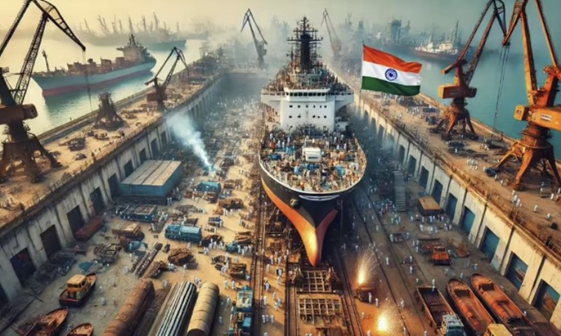
The incentive will
be available to both existing and proposed shipyards in Gujarat, including
major facilities such as Swan Defence and Heavy Industries Ltd (SDHI), which
operates the country’s largest shipyard by drydock capacity. Under the policy, shipyards located in
Gujarat will be eligible for a top-up incentive of 8 per cent of the vessel
cost or ₹50 crore, whichever is lower, for small and large vessels. For
specialised vessels, the state will provide 10 per cent of the vessel cost or
₹50 crore, whichever is lower. The move
is aimed at reducing the cost disadvantage faced by Indian shipbuilders when
competing against established global shipbuilding nations such as China, South
Korea and Japan.
The policy complements the Centre’s revamped Shipbuilding
Financial Assistance Scheme, for which the Union government has earmarked
₹20,416 crore. The scheme is designed to support the construction of small,
large and specialised vessels and will remain operational until March 2036,
with in-principle approval extending support measures through 2047. Under the Central scheme: Normal vessels
costing up to ₹100 crore will receive financial assistance of up to 15 per cent
of the actual vessel value. For
normal vessels costing more than ₹100 crore, assistance will be calculated at
15 per cent on the first ₹100 crore and 20 per cent on the remaining value;
Specialised vessels will receive 15 per cent assistance on the first ₹100 crore
and 25 per cent on the balance cost.
To improve cash flow management for shipyards, financial assistance will
be disbursed in three stages: 30 per cent at keel laying (against security),
40 per cent at launching (against security), and 30 per cent upon vessel
delivery, after which the security will be released. The policy adopts the Central
government’s list of specialised vessels eligible for financial assistance.
These include LNG, LPG and ammonia carriers; very large crude carriers (VLCCs);
very large gas carriers (VLGCs); Suezmax and Aframax tankers; chemical tankers;
offshore drilling and production platforms; FPSOs, FSOs and FSRUs; MODU rigs;
polar-class exploration vessels; self-propelled dredgers; wind turbine
installation vessels; cable-laying vessels; ocean research vessels; large
passenger vessels; container ships of 8,000 TEUs or more; and next-generation
green and hybrid vessels powered by fuels such as methanol, ammonia, LNG, LPG,
hydrogen fuel cells and battery-electric systems.
According to the
Gujarat government, the policy will initially remain in force for five years
and may be extended for an additional five-year period based on industry
response and investment outcomes.
Industry stakeholders believe the combined support from the Centre and
the state could significantly strengthen Gujarat’s position in the global
shipbuilding market, attract fresh investments, generate employment and
accelerate the development of advanced shipbuilding capabilities in India.