

Office Address
123/A, Miranda City Likaoli Prikano, Dope
Phone Number
+0989 7876 9865 9
+(090) 8765 86543 85
Email Address
info@example.com
example.mail@hum.com


123/A, Miranda City Likaoli Prikano, Dope
+0989 7876 9865 9
+(090) 8765 86543 85
info@example.com
example.mail@hum.com
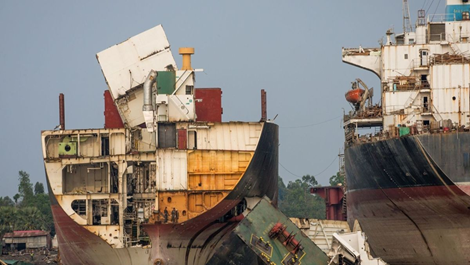
Over the
next ten years, ship recycling is predicted to more than treble, with an
estimated 16,000 ships—or 700 million deadweight tons (DWT)—being demolished
worldwide. Following the official implementation of the Hong
Kong International Convention for the Safe and Environmentally Sound Recycling
of Ships on June 26, there has been a notable increase.
BIMCO, a prominent international maritime association,
has raised its forecast from 15,000 ships. Almost three times as much tonnage
and nearly twice as many ships have been recycled in the past ten years. This indicates an urgent need for
additional investments in ship recycling yards that adhere to international
safety and environmental requirements.
Using average recycling rates per vessel type and age,
the estimate was based on recycling trends from 2000 to 2019. For instance,
BIMCO anticipates a similar trend over the following ten years if 10% of
20-year-old capesize bulk carriers were destroyed during that time. Going
forward, scrapping activity is anticipated to be dominated by ships constructed
in the 2000s. Between 2015 and 2024, ships built in the 1990s accounted for 62%
of recycled DWT and 35% of destroyed ships. Nonetheless, the 2000s saw a
significant boom in shipbuilding, with tonnage rising by 115% and ship
production increasing by 31%. In contrast to the 20% of ships and 67% of DWT
constructed in the 1990s, just 3% of those ships and 5% of their DWT have been
recycled thus far.
While bulk
carriers, tankers, and container ships will make up the majority of scrapped
tonnage, around 91%, they account for just over half of the total number of
vessels. The remaining will include general cargo vessels and fishing boats,
each expected to contribute numbers close to the larger sectors. From 2015 to
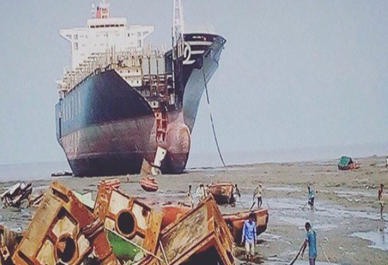
2024, most ship recycling took place in South Asia. Bangladesh, India, and
Pakistan handled 86% of recycled DWT and 58% of vessels. Their dominance grew even stronger after 2017, when
China exited international ship recycling.
Since then, China has scrapped less than 2% of global
DWT. Outside South Asia, Turkey remains a notable location, especially for
dismantling offshore vessels. Despite some projects to expand shipbreaking capacity
in other regions, BIMCO believes South Asia will remain the primary hub for the
foreseeable future.
The previous record for ship recycling occurred in
2012, with about 1,800 ships and 60 million DWT dismantled. Starting in 2027,
annual recycling volumes could surpass that record each year, given the large
number of aging ships and tighter environmental policies. However, the actual
number could vary depending on market dynamics. BIMCO stated that if the shipping market remains strong, recycling
might fall below projections. On the other hand, weak markets or increased
pressure to cut emissions may push scrapping levels even higher.
The Hong Kong Convention is key to this shift, setting
mandatory rules for how ships must be dismantled at the end of their service.
The Convention aims to protect both the environment and the workers involved in
shipbreaking. It took effect on June 26 after years of preparation, with 24
countries having ratified it.
These
include key ship recycling nations such as Bangladesh, India, Pakistan, and
Türkiye, along with major ship registry nations like Japan, Liberia, Panama,
and the Marshall Islands. Collectively, these countries represent over 57% of
the world’s shipping by tonnage.
The IMO sees
the enforcement of the Hong Kong Convention as a historic moment. Dominguez
stated that the move represents years of hard work and will boost global
efforts to safeguard both human health and the environment during ship
recycling…According to Ingvild Jenssen, the NGO’s executive
director, the Convention benefits shipping companies more than workers, by
allowing them to avoid the full cost of safe and sustainable recycling. She
also warned that it could undermine competition by disadvantaging responsible
recyclers who operate at higher safety standards. Still, the Convention’s
supporters argue that it brings long-overdue structure to a dangerous and often
poorly regulated industry.