

Office Address
123/A, Miranda City Likaoli Prikano, Dope
Phone Number
+0989 7876 9865 9
+(090) 8765 86543 85
Email Address
info@example.com
example.mail@hum.com


123/A, Miranda City Likaoli Prikano, Dope
+0989 7876 9865 9
+(090) 8765 86543 85
info@example.com
example.mail@hum.com
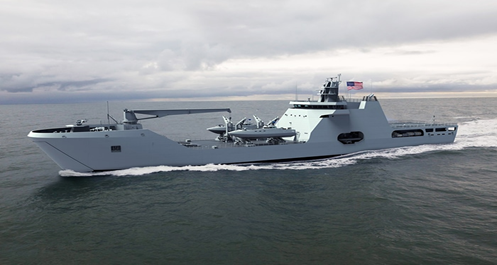
For initial
production, the Navy will direct the VCM to manage LSM construction at two
shipyards: Bollinger Shipyards and Fincantieri Marinette Marine. Bollinger
Shipyards was awarded a contract to support LSM long lead time procurement and
lead ship engineering design activities in September 2025; Fincantieri will
execute LSM work to build four ships. The VCM will then have the ability to
decide the best strategy for awarding the remaining three ships authorized
under the base contract.
The VCM will hold the prime contract with the Navy
and, in turn, issue and manage its own subcontracts directly with the shipyards.
This places the VCM in direct contractual control of shipyard performance and
creates a buffer that, along with a proven design, is expected to reduce cost
and schedule risks.
“The VCM approach not only accelerates construction
timelines but also strengthens our industrial base by engaging multiple
shipyards,” said Rear Adm. Brian Metcalf, program executive officer, ships. “By
providing a mature, ‘build-to-print’ design and empowering a VCM to manage
production, we are streamlining oversight for this acquisition. This approach
accelerates the timeline and strengthens our industrial base, ensuring we have
the capacity and expertise needed for sustained maritime advantage.”
This acquisition
strategy is a key component of the Navy and Marine Corps’ effort to address
readiness in the Indo-Pacific and reflects a change in how the Navy
traditionally contracts and oversees ship construction. Leveraging this new
approach, the VCM is responsible for managing the entire construction program,
from the design phase through to vessel delivery and post-delivery support.
The VCM will manage production across multiple
shipyards in parallel using proven commercial shipbuilding practices, with
significantly fewer Navy personnel than a traditional shipbuilding program
would require.
The Navy will provide
a mature, “build-to-print” vessel design, significantly reducing technical and
schedule risks. In December 2025, the Navy and Marine Corps jointly announced
Damen Naval’s LST 100 – a proven, non-developmental design – would serve as the
baseline to help rapidly field LSM capability (see earlier story).
NAVSEA says that the
LSM will fill the capability gap between smaller, short-range landing craft and
the Navy’s long-duration, multi-purpose amphibious warfare ships. It is
essential for the maneuver and sustainment of Marine forces, providing the
critical littoral mobility required in contested environments. The program will
deliver a 35-ship fleet that enhances expeditionary agility and supports the
Marine Corps’ concept of distributed maneuver and logistics.