

Office Address
123/A, Miranda City Likaoli Prikano, Dope
Phone Number
+0989 7876 9865 9
+(090) 8765 86543 85
Email Address
info@example.com
example.mail@hum.com


123/A, Miranda City Likaoli Prikano, Dope
+0989 7876 9865 9
+(090) 8765 86543 85
info@example.com
example.mail@hum.com
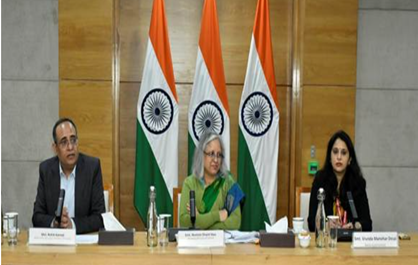
The consultation focused on operationalising two key
initiatives announced in the Budget – the Textile Expansion and Employment (TEEM) Scheme
and the Tex Eco Initiative – aimed at strengthening competitiveness, modernisation,
sustainability and employment generation across the textile and apparel
sector. Shri. Rohit Kansal, Additional
Secretary (Textiles), delivered the welcome and
context-setting address, emphasising that the Union Budget has been distinctly
textile-centric, with a strong focus on employment generation and manufacturing
growth. He noted that the announcement of an integrated programme for the
textile sector provides a comprehensive framework to align investments, policy
support and institutional efforts across the value chain. He further underlined
that the Budget signals a clear intent to scale manufacturing, strengthen
domestic capabilities and position textiles as a key driver of inclusive growth
and job creation.
Delivering the
special address, Smt. NeelamShami Rao, Secretary (Textiles), highlighted that
after a year marked by resilience amid global headwinds, the outlook for the
Indian textile industry is increasingly favourable. She noted that key Free
Trade Agreements (FTAs) now in place are opening significant new market
opportunities for Indian exporters, enhancing tariff competitiveness and
strengthening India’s position in global value chains. She emphasised that the
convergence of these trade agreements with a distinctly textile-centric Union
Budget creates a timely and strategic advantage for the sector. With expanded market access, policy clarity
and focused government support, she stated that the industry is well-positioned
to scale up production, attract investments and deepen its footprint in global
markets…The interactive session saw proactive and constructive engagement from
stakeholders, who appreciated the forward-looking design of TEEM and Tex Eco
and endorsed the integrated framework for addressing structural gaps and leveraging
global opportunities. Industry offered practical recommendations, including
time-bound approvals, improved MSME financing, cluster infrastructure, targeted
skilling, digital monitoring, and sustainability-linked incentives, while
urging convergence with state policies and export measures. Several
participants appreciated the efforts of the government in rolling out a
comprehensive and integrated textiles package. In his summing-up remarks, Shri. Rohit
Kansal reaffirmed the Ministry’s commitment to a collaborative approach to
translate policy intent into tangible, measurable results on the ground.He
appreciated the industry for its proactive participation and candid feedback,
stating that such structured consultations would continue to shape effective
and responsive policymaking. He further urged industry stakeholders to share
detailed written inputs and specific suggestions with the Ministry’s team to
facilitate timely finalisation and ensure effective implementation.
The session concluded with a vote of thanks by Smt.
Vrunda Manohar Desai, Textile Commissioner…The post-budget National
Industry Consultation marks an important step in strengthening structured
government, industry dialogue and advancing a coordinated roadmap to enhance
India’s position as a credible, competitive and sustainable global textile hub.
The discussions reflected a shared resolve between Government and industry to
position India as a credible and trusted global textiles partner anchored in
scale, sustainability and reliability.