

Office Address
123/A, Miranda City Likaoli Prikano, Dope
Phone Number
+0989 7876 9865 9
+(090) 8765 86543 85
Email Address
info@example.com
example.mail@hum.com


123/A, Miranda City Likaoli Prikano, Dope
+0989 7876 9865 9
+(090) 8765 86543 85
info@example.com
example.mail@hum.com
The prevalence of
maritime cyberattacks doubled in 2025, according to Korean security firm Cytur,
led by an explosion of malware and distributed denial of service (DDoS)
incidents. Some of the most concerning examples involved a high-level
penetration of the shoreside supply chain, giving the attackers useful
information about systems (or even remote access) at a fleet level. Others
extended to worst-case scenarios: destroyed equipment, hacked ECDIS chart
systems, and remote control of ballast valves.
Hackers are getting
better at targeting shipping, Cytur's report shows, and they have a reason:
money. Access is the same as ever - exploiting unwitting crewmembers via
phishing emails; breaching unprotected public wifi used by the crew; or
sneaking aboard via a hacked USB drive, whether by bribing a crewmember to use
the drive or by accident. But Cyber threat actors are finding more ways to
monetize vessel information, whether by encrypting it, holding it hostage and
demanding a ransom from the operator, or by stealing it and selling it to third
parties on the Dark Web.
Illicit items found for sale online include voyage
logs, cargo manifests, ship design schematics and the personal information of
the crew, according to Cytur. Often the operator will pay to avoid having their
internal records released: one common ransomware attack involves encrypting the
ship's Planned Maintenance System (PMS), forcing the operator to pay in order
to recover the voyage's logs. Ransomware attacks and data theft are often found
in high-traffic regions, like Asian waters and major hub ports, Cytur said.
Another common form of attack is distributed denial
of service (DDoS), a brute-force swarm of automated activity that swamps a
network and crowds out legitimate traffic. Hackers may hijack vulnerable
onboard routers and other IT infrastructure, then use it to send so many
requests that it overwhelms the capacity of the ship's satcom connection,
temporarily rendering the ship unable to exchange messages with the home
office.
More concerning,
though, are hacks targeted at disabling or hijacking ship systems. The
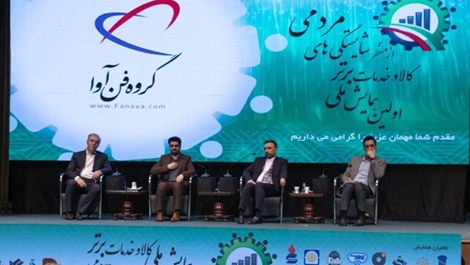
"Lab Dookhtegan" ("sewn lips") attack on Iranian tonnage
last year was a concerning example. The threat group systematically targeted an
Iranian satcom provider, Fanava, to carry out an attack high up the digital
supply chain for Iran's state-owned fleet of tankers. After penetrating Fanava,
Lab Dookhtegan obtained fleetwide control over ship to shore VOIP services,
making it harder for the vessels to communicate with the home office or with
port officials.
While in possession of
access to the ships' networks, the Lab Dookhtegan group stole corporate
documents belonging to Iranian state firms NITC and IRISL, then released them
online. When done with its access mission, it destroyed the ships' modems by
overwriting partitioned memory; physical replacement of the hardware was
required.
Another advanced supply chain attack occurred in
October, when Japanese radar and ECDIS builder Furuno was hit by ransomware.
The hacking threat group, known as Rhysida, stole Furuno's internal data and
threatened to release it; meanwhile, it encrypted the firm's data, disabled
backup servers and demanded payment. The attack temporarily interfered with
service, updates and parts shipments for Furuno.
Most concerning may be
hacking attacks on operating technology (OT), like engine control systems and
ballast water systems. Cytur warned that the remote access communications
protocols baked into equipment electronics - used by OEM troubleshooting teams to
remotely diagnose errors and make changes - remain a vulnerability. If a hacker
could remotely control engine output, or ballasting, the results could be
catastrophic. Bottom of Form
Going forward, Cytur
anticipates that AI agent-assisted attacks will become more prevalent, and that
this year will be the beginning of an era of "autonomous attacks"
with largely or fully AI-directed hacking campaigns. This will de-skill
cyber crime, opening up the door to a larger number of would-be hackers, the
consultancy predicts.
"The incident
data from 2024 and 2025 proves that maritime cybersecurity is no longer an
‘option’ but a matter directly linked to a vessel’s ‘right to operate,'"
said Cho Yong Hyun, CEO of Cytur.