

Office Address
123/A, Miranda City Likaoli Prikano, Dope
Phone Number
+0989 7876 9865 9
+(090) 8765 86543 85
Email Address
info@example.com
example.mail@hum.com


123/A, Miranda City Likaoli Prikano, Dope
+0989 7876 9865 9
+(090) 8765 86543 85
info@example.com
example.mail@hum.com
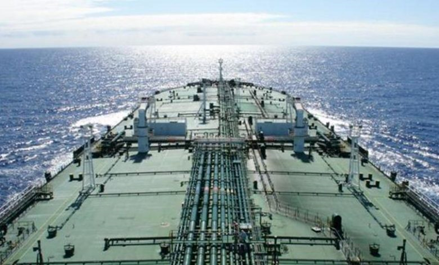
The disruption by the Middle East war has effectively immobilised 329
crude and product tankers in the Middle East Gulf, including 72 VLCCs – roughly
8% of global VLCC supply – with broader effective supply hits across segments:
suezmaxes ~5%, aframax/LR2s ~3%, LR1s ~9% and MRs ~4%, according to data from
broker Arrow. “This is a substantial capacity shock to a market that had very
little slack to begin with, and freight is already reflecting that,” Arrow
said.
Greek owners are repositioning to profit. Dynacom‑controlled tonnage, including suezmaxes
Pola and Smyrni and the 2018-built Marathi, are ballasting west through Hormuz,
lining up for prompt Arabian Gulf cargoes as replacements and reroutings
multiply. Suezmax fixtures reportedly exceeded $300,000 a day yesterday,
underscoring the spike.
Stamatis Tsantanis, chairman and the CEO of Greek owner Seanergy
Maritime, commented: “There are certain shipowners in the world who say, ‘I’m
going to do it.’That’s always the case in these kinds of situations, where
people take risks and potentially risk the lives of crewmembers and the ship
itself.”
Allied Shipbroking noted in a weekly report today: “Historical episodes,
including the tanker attacks during the Iran–Iraq War and the 2019 Gulf
incidents, show that shipping and energy markets can operate under significant
strain, even as freight volatility and risk premiums remain elevated while
uncertainty persists.”
The insurance fallout has been swift. The Joint War Committee expanded defined peril zones as missiles and
drones continue to litter the skies in the region – adding Bahrain, Djibouti,
Kuwait, Oman and Qatar and extending coverage amendments across parts of the
Red Sea and Pakistan coast – presaging rising war‑risk premiums and cancelling
cover for many voyages.
Aware of the political fallout from rising petrol
prices at home, US president Donald Trump pledged on Truth Social last night to
mobilise US support to keep ships moving, writing: “Effective IMMEDIATELY, I
have ordered the United States Development Finance Corporation (DFC) to
provide, at a very reasonable price, political risk insurance and guarantees
for the Financial Security of ALL Maritime Trade…
If necessary, the United States
Navy will begin escorting tankers through the Strait of Hormuz, as soon as
possible.”