

Office Address
123/A, Miranda City Likaoli Prikano, Dope
Phone Number
+0989 7876 9865 9
+(090) 8765 86543 85
Email Address
info@example.com
example.mail@hum.com


123/A, Miranda City Likaoli Prikano, Dope
+0989 7876 9865 9
+(090) 8765 86543 85
info@example.com
example.mail@hum.com
Getting a clear
picture of what traffic is currently passing through the Strait of Hormuz
is difficult at present for the external observer. The US military and the
Omani coast guard will have a complete picture, but ship trackers used to
dependency on AIS signals are now deprived of their primary source of
information, as vessels passing through the strait are clearly not wishing to
advertise their presence and are traveling with AIS systems switched off.
However, it is
possible to discern the general pattern of movement. Iranian ships, or ships
licensed by the Iranian authorities, are hiding their identities and are
passing through the strait. A small number of vessels not approved by the
Iranians are making the passage, but at high risk of being attacked.
In effect, the strait
is open to Iranian or Iranian-approved traffic, and largely closed to
others, meaning that the Iranians are suffering little economic damage – and
may indeed be benefitting from high oil and gas prices - while the
Gulf States are blockaded.
With Iranian approval, two passages have been made
by laden Indian-flagged LPG tankers, the Shivalik (IMO
9356892) and the Nanda Devi (IMO 9232503), both owned by the
parastatal Shipping Corporation of India (SCI), India’s largest shipping
company. Both ships are known to have loaded Qatari gas at Ras Laffan
beforehand. The two SCI ships were escorted through the strait by the Indian
Navy. Lloyd's List Intelligence also reported that an unidentified crude tanker
laden with Saudi oil had also transited en route to India in the same time
period.
The VLCC Smyrni (IMO 9493779),
Liberian-flagged and managed by the Greek shipping company Dynacom, transited
the strait en route to Mumbai sometime after March 5, laden with Saudi oil. It
is not known if it had some form of permission based on the Indian destination
of its cargo. Other Dynacom-managed ships are also believed to have made
transits.
The Guinea-flagged oil products tanker Ocean
Guardian (IMO 9267948) from Basra, Iraq transited eastwards on
March 12. The Ocean Guardian, formerly the Danube, is
OFAC-sanctioned with a classic shadow fleet history.
Another Basra-associated, OFAC-sanctioned oil
products tanker, the Aruba-flagged Blooming Dale (IMO 9125724)
was on March 13 transiting eastwards in the strait. The Belize-flagged bulk
carrier Rozana (IMO 9198381), a frequent visitor to Russia,
also seemed able to make an unhindered eastward passage of the strait on March
7.
The Iranian ambassador to Iraq has said that Iraqi-owned vessels are
allowed passage if they are not US or Israeli-linked. ISW reported also that the Turkish Transport
Ministry had allowed an unidentified Turkish-owned ship to leave the Gulf, and
on March 7, the Panama-flagged but Turkish-owned LPG Bogazici (IMO
9237747) was seen entering the Gulf, hauling Emirati gas to India. The Marshall
Islands-registered bulk carrier Iron Maiden (IMO 9691149)
seems to have slipped through the strait heading for Singapore on March 4 by
describing itself as "all Chinese-crewed" - a practice seen
previously during the Red Sea crisis.
Overall, this is an
incomplete and somewhat confusing picture. Lloyd's List Intelligence has picked
up nine dark fleet transits of the strait in March, but assess that in total
there have been 45 such transits - and probably much more. Lloyd's List
has also detected movements out of the Gulf of at least one Iranian container
ship. Sky News' Data & Forensics team estimates that 13 ships have
transited the Strait of Hormuz from March 2-9. In among these ship
movements are Iran-linked shadow fleet tankers, which are still loading crude
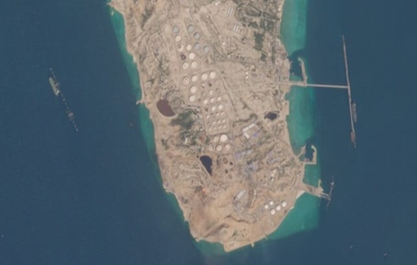
oil at Kharg Island, Iran’s primary export hub.
It would be safe to
conclude that while access needed by GCC states and the wider world has been
choked off, Iran is enjoying economic and political benefit from the traffic it
is allowing through the strait. This Iranian-sanctioned traffic is at well
below pre-war levels, but is nonetheless keeping Iran afloat.
In contrast, the effects on those denied access are
economically punitive and getting increasingly worse. It is also politically
corrosive to the American war effort: those states suffering from the
Iranian blockade are now agitating for an early end to the war, before U.S.
aims are achieved.
The obvious solution is not the easiest. A military
operation to lift Iranian control over the strait would be a complex and
challenging, and it is not clear if there are sufficient naval forces available
to conduct convoy operations successfully. Even if escorts were available,
independent estimates suggest that the logistical math of convoy operation would restrict tanker
traffic volume to a small fraction of normal levels, per Lloyd's List.
The alternative would be to impose an economic
blockade and to interdict Iranian ships. This latter course has the
benefit of hitting the finances of the Iranian regime, which needs money both
to maintain its machinery of state suppression and to keep the Iranian economy
afloat through subsidies. Militarily, now that the United States has swept the
Iranian navy from the seas, it has an interdiction tool available for the
task: the expected arrival in theater of the 2,200 Marines of the 31st MEU.
Such an operation would require political patience, a commodity which currently
is in short supply, and would strain the U.S. operating model of involving
Coast Guard law enforcement in every vessel boarding.
Iran also has a Single Buoy Mooring (SBM) off the
Kooh Mobarak oil storage facility on the Jask peninsula outside the Gulf, built
in order to reduce dependency on Kharg Island. It takes generally two days to
load a VLCC tanker moored at the SBM. But since it was opened in July 2021 by
Iranian President Hassan Rouhani, the facility has only been used sporadically,
reflecting construction problems with Iran’s crude pipeline infrastructure
serving the Jask terminal. The SBM does not appear to have been used at all in
January and February this year.