
Office Address
123/A, Miranda City Likaoli Prikano, Dope
Phone Number
+0989 7876 9865 9
+(090) 8765 86543 85
Email Address
info@example.com
example.mail@hum.com


123/A, Miranda City Likaoli Prikano, Dope
+0989 7876 9865 9
+(090) 8765 86543 85
info@example.com
example.mail@hum.com
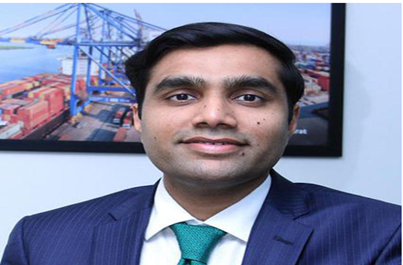
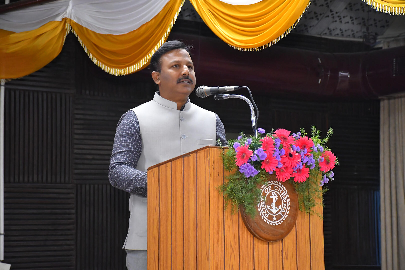
Speaking at an
event, he said the ongoing crisis in West Asia has highlighted the
vulnerability of global trade routes passing through key maritime choke points,
such as the Strait of Hormuz, the Suez Canal and the Strait of Malacca.
“Anything which is imported–I would say any commodity
where the country is reliant from an import perspective–will get affected.
Whether it’s crude, whether it’s gas, or whether it’s LPG. This kind of event
affects all commodities across the board,” he said, answering a query.
Disruptions along
these corridors can quickly ripple across global supply chains, reinforcing the
need for stronger logistics infrastructure and diversified trade networks.
“Need to make
ourselves self-reliant as a country from energy import perspective”: Karan
Adani on disruptions caused by West Asia crisis. Anything which is imported–I
would say any commodity where the country is reliant from an import
perspective–will get affected. Whether it’s crude, whether it’s gas, or whether
it’s LPG. This kind of event affects all commodities across the board,” he
said, answering a query.
“I think what we need to look at is how do we make
ourselves self-reliant as a country from an energy import perspective. Do we
have alternatives towards, let’s say, LPG? Do we have alternatives towards LNG?
That’s where we’ll have to play our cards for what is right for us as a
country. Because India has a lot of resources, whether it is coal, or whether
it’s even our own production of crude or gas,” he said.
Karan Adani, who is
the eldest son of Adani
Group Chairman Gautam Adani, said India has to prioritize what
is important and “where our strength is”.
“And I think this
becomes a classic case where we have to further accelerate our energy independence,
how we protect ourselves from that energy dependence,” he said. He was asked about the challenge of oil
and gas supply disruptions from Strait of Hormuz due to conflict in West Asia
between US and Israel on one side and Iran on the other. Answering
another query, Karan Adani, who is also Director at Adani Cement, said there
has been constant disruption on the supply chain for the last four to five
years and spoke about COVID-19, Suez Canal obstruction and Russia-Ukraine
conflict. “There is always been something or the other
which is going on which is affecting the supply chain. And if you see from 2020
onwards, most countries have moved from globalization of the supply chain to
more of a regionalization of the supply chain. Even India did that as well. So
that is number one. And in that, having your own infrastructure becomes
extremely critical for a country to make sure that your supply chain is stable
and reliable. From our perspective, given the current situation, we are fully geared
up as a port to handle any and every cargo which comes into India,” he said.
“We’ve been able to prioritize what is important for
the country, whether it’s energy, whether it’s LPG, or whether it’s crude. So
we are fully geared up in terms of handling all of this cargo. I think it
becomes extremely critical going forward: how do we make our supply chain even
more resilient as a country? Obviously, we would love to play a part in that
because this becomes a very critical part. It happens once in every two to
three years, but whenever it happens, it does pinch a lot. So I think that
becomes extremely important,” he added.
“The second big
part of the group is the whole ports, logistics, transport utility…And the
third big vertical for the group is the whole materials and science part…even
the defence–that falls part of the materials business. That’s how you should
look at the Group. We are very focused, we know where our core competency is,
and that’s how we are structured,” he added.
Karan Adani said the
Group today has almost 10 layers from the Chairman all the way to the
bottom-most person…“It is almost a
10-layer organisation. We want to reduce it to six layers–three at HO (Head
Office), three at site. And basically, the idea is: focus on what we are good
at as an organisation, which is, you know, ability to take decisions much
faster, giving trust at the bottom-most person on the ground because they are
the ones who are running the assets. And third, to bring in transparency and
accountability for the people.”