

Office Address
123/A, Miranda City Likaoli Prikano, Dope
Phone Number
+0989 7876 9865 9
+(090) 8765 86543 85
Email Address
info@example.com
example.mail@hum.com


123/A, Miranda City Likaoli Prikano, Dope
+0989 7876 9865 9
+(090) 8765 86543 85
info@example.com
example.mail@hum.com
“This is
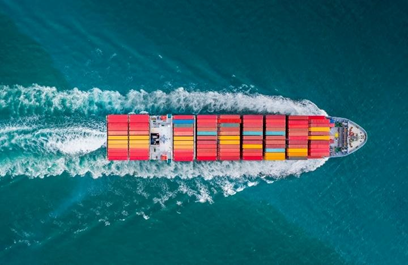
going to sound weird. Globally, strictly on container shipping, it’s a problem,
but it’s not a major problem,” Jensen told conference attendees. “It’s
definitely not pandemic-scale.”
When Houthi militants in Yemen began their attacks on
shipping in the Red Sea two years ago, container ships serving the Asia-Europe,
Asia-Mediterranean and Asia-US East Coast trade lanes were forced to make
lengthy and costly diversions around the southern tip of Africa. The current
danger zone in the Middle East is much more limited. “In this case, it is … ‘only’ the cargo in
the Gulf. So from a global perspective, yes there will be an impact,” Jensen
said. “It will contract capacity some, but it’s not a major disaster for the
countries in the Gulf.”
Looking at the volume of containers destined for the
Strait of Hormuz, either on board vessels already or at least booked within the
next 90 days to head toward the Gulf, approximately 2 million TEUs will be
impacted, he said. A significant portion of that total will be offloaded at
ports around the Strait of Hormuz.
The war,
meanwhile, has put to rest the assumption importers had entering 2026 that
container traffic from Asia bound for Europe and the US East Coast would return
to the Suez Canal in the second half of this year, thereby reducing carriers’
leverage in pricing. “The baseline
outlook for 2026 now has to include the assumption that the deviations around
Africa will continue this year, and therefore materially strengthen the supply
and demand balance,” Jensen said.
As for when container ships will contemplate returning
to the Suez Canal, he said that discussion has been kicked down the road for at
least another six months.
“So realistically, we are probably looking at least six months into the future
before anybody is going to start contemplating doing this again, and that is if
we stop the war basically today,” Jensen said.
Major container lines have mostly avoided the Red
Sea/Suez route since late 2023, when Houthi militants began their attacks on
commercial shipping to protest Israel’s move into Gaza, forcing the diversions
around southern Africa. Those attacks stopped last October after the ceasefire
agreement between Israel and Hamas, prompting some major carriers to resume
transits through the volatile area on a small scale in recent months.
In the short
term, oil prices, and therefore bunker fuel prices, will increase, which will
impact container shipping costs. And that means ocean carriers will respond
with increased fuel surcharges.
“On account
of the Middle East, the carriers will go gangbusters in terms of implementing
as many and as high surcharges as humanly possible, and not just on trades to
and from the Gulf, [but] everywhere,” Jensen said. “They will be called
emergency fuel surcharges, emergency conflict surcharges, and whatever nice
names, but they will be a reality. The only question is, how high will it go
and how long will it last.”
Even cargo owners who are shipping only from Asia to
the US West Coast will feel an impact from events in the Middle East in terms
of surcharges and disrupted operations in the form of knock-on congestion.
“You’re going to get all of these congestion effects
in Asia that [are] going to impact everything and everyone, so you’re going to
see these surcharges also on the Pacific,” Jensen said.