

Office Address
123/A, Miranda City Likaoli Prikano, Dope
Phone Number
+0989 7876 9865 9
+(090) 8765 86543 85
Email Address
info@example.com
example.mail@hum.com


123/A, Miranda City Likaoli Prikano, Dope
+0989 7876 9865 9
+(090) 8765 86543 85
info@example.com
example.mail@hum.com
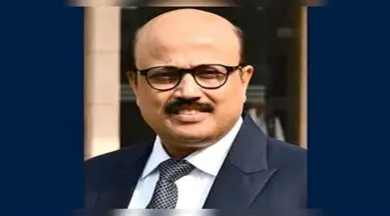
He said at a media
briefing that India and the US announced a trade deal on February 2, and a
Joint Statement for the same was released on February 7.
“On February 7, 2026, the 25% additional ad-valorem
tariffs imposed by the U.S. on certain Indian exports citing India’s imports of
Russian oil were removed,” he said.
The Commerce
Secretary said that pursuant to the US
Supreme Court judgement of February 20, 2026 invalidating
reciprocal tariffs, the reciprocal tariffs are no longer in force.
“The US Government has issued Executive Orders
imposing 10% tariffs pursuant to Section 122 of the Trade Act, 1974 on certain
products from all countries. India remains engaged with the US side for a
mutually beneficial trade agreement,” he said.
Sources said the US is trying to recreate a tariff
architecture globally and once that is created, will be better to sign the
trade deal. They added that trade agreement would be signed when a new
architecture of tariffs globally is implemented by the US. There were
indications earlier that Interim Trade Agreement could be signed in March.
Commerce Ministry officials had said last week that
India and the United States remain engaged for a mutually beneficial trade
agreement, and there is no hold off in bilateral engagement.
The Ministry rejected reports in sections of the media
that talks between India and the United States for a Bilateral Trade
Arrangement are on hold.
.The United States and India last month announced that
they have reached a framework for an Interim Agreement regarding reciprocal and
mutually beneficial trade. The framework reaffirmed the countries’ commitment
to the broader
US-India Bilateral Trade Agreement (BTA) negotiations, launched
by President Donald J
Trump and
Prime Minister Shri Narendra Modi on February 13, 2025, which
will include additional market access commitments and support more resilient
supply chains.
“We have noted a media report regarding ongoing trade
talks with the US. It is denied that there is any hold off in bilateral
engagement. It is reiterated that the two sides remain engaged for a mutually
beneficial trade agreement,” the Commerce Ministry had said.
In a fresh
development, the Donald Trump administration has initiated fresh investigations
into alleged “unfair trade practices” by 16 major trading partners, including
India, China, and Bangladesh.
The move aims to reinstate tariff pressure following a
US Supreme Court ruling last month that declared previous levies illegal.
These inquiries are being carried out under “Section 301” of the Trade Act of
1974. This legislation grants the US Trade Representative the authority to
enforce tariffs or other punitive actions against nations found to be using
unfair trade practices.
US Trade Representative Jamieson Greer indicated that
the investigations could result in new tariffs being applied to China, the
European Union, India, Japan, South Korea, and Mexico by the coming summer.
The “excess
capacity” probe also extends to several other partners, including Taiwan, Vietnam,
Thailand, Malaysia, Cambodia, Singapore, Indonesia, Bangladesh, Switzerland,
and Norway. Notably, Canada, the second-largest trading partner of the US, was
excluded from the list.
The BTA, formally
proposed in February 2025, seeks to more than double bilateral trade between
India and the US, from the current USD 191 billion to USD 500 billion by 2030.