




Office Address
123/A, Miranda City Likaoli Prikano, Dope
Phone Number
+0989 7876 9865 9
+(090) 8765 86543 85
Email Address
info@example.com
example.mail@hum.com


123/A, Miranda City Likaoli Prikano, Dope
+0989 7876 9865 9
+(090) 8765 86543 85
info@example.com
example.mail@hum.com
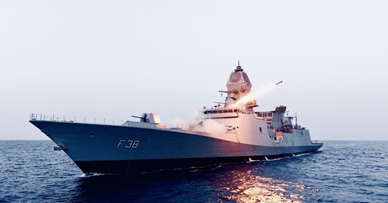
The commissioning ceremony will be attended by
Defence Minister Rajnath Singh. Designed by the Indian Navy’s Warship Design
Bureau and built by Mazagon Dock Shipbuilders Limited (MDL) in Mumbai, INS
Mahendragiri is the sixth stealth frigate under the Project 17A programme. The warship joins the fleet just weeks
after the commissioning of INS Dunagiri, the fifth Nilgiri-class frigate,
continuing the Navy’s induction of next-generation indigenous warships. INS
Mahendragiri is designed to carry out anti-air, anti-surface and anti-submarine
warfare missions. It can also be deployed for maritime security operations,
search and rescue, humanitarian assistance and disaster relief (HADR), power
projection and long-duration operational deployments. The
frigate is equipped with an advanced range of indigenous weapons and sensors,
including surface-to-surface and surface-to-air missile systems, electronic
warfare systems, anti-submarine warfare equipment and an integrated Combat
Management System. Its main weapons include BrahMos supersonic cruise missiles
for long-range strikes and Barak-8 surface-to-air missiles for air defence. It
also carries advanced torpedoes, rocket launchers and AK-630 close-in weapon
systems, enabling it to respond to threats in the air, on the sea and
underwater. INS Mahendragiri is 149
metres long, displaces around 6,670 tonnes and can reach a top speed of about
28 knots. It is powered by a Combined Diesel or Gas (CODOG) propulsion system,
allowing it to operate at high speeds while maintaining long endurance during
missions. According to the Indian
Navy, the frigate has advanced stealth features that reduce its radar
signature, improving its survivability during operations. It also has a high
level of automation to support efficient operations. The warship is named
after the Mahendragiri mountain range in the Eastern Ghats and is the first
Indian naval vessel to carry the name. INS Mahendragiri is one of seven
Nilgiri-class guided missile frigates being built under Project 17A, one of
India’s largest indigenous warship-building programmes. Four ships are being built by Mazagon Dock
Shipbuilders Limited, while the remaining three are under construction at
Garden Reach Shipbuilders & Engineers (GRSE). The project has achieved more than 75%
indigenous content, showing India’s efforts to expand domestic defence manufacturing
under the Aatmanirbhar Bharat initiative.
According to the Navy, construction of the frigate involved a large
network of Indian industries, including more than 200 micro, small and medium
enterprises (MSMEs). The programme has generated direct
employment for around 4,000 people and indirect jobs for more than 10,000
others. INS Mahendragiri was delivered
to the Indian Navy on April 30, about 17 months after the delivery of the lead
ship, INS Nilgiri, in December 2024. The shorter delivery timeline reflects
improved efficiency in India’s naval shipbuilding programme. Project 17A ships are designed as an
upgrade to the earlier Project 17 Shivalik-class frigates, with improved
stealth features, more advanced weapons and sensors, and greater automation.