




Office Address
123/A, Miranda City Likaoli Prikano, Dope
Phone Number
+0989 7876 9865 9
+(090) 8765 86543 85
Email Address
info@example.com
example.mail@hum.com


123/A, Miranda City Likaoli Prikano, Dope
+0989 7876 9865 9
+(090) 8765 86543 85
info@example.com
example.mail@hum.com
Having first invested in the Company in 2020, I have remained a
patient and dedicated shareholder throughout one of the most challenging
periods in its history. My investment was based on the belief that the market
was materially undervaluing one of the highest-quality offshore support fleets
in the industry. I also believed that, despite one of the worst downturns the
offshore service vessel industry had ever experienced, the Company could preserve
the integrity of its fleet and emerge as a meaningful beneficiary when the
cycle inevitably recovered. That investment thesis has largely played out.
Unfortunately, many of SEACOR's competitors
emerged from restructuring with significantly deleveraged balance sheets and
went on to deliver dramatically superior shareholder returns during the
industry's recovery. SEACOR, by contrast, successfully preserved its core fleet
through the downturn but continued to carry a substantially heavier debt
burden, leaving shareholders to bear years of elevated interest expense and
financial constraints. Today, the offshore service vessel market is
experiencing one of its strongest environments in years. The North Sea, Brazil,
and West Africa – all regions where SEACOR has an established presence – are
benefiting from strong day rates, high utilization, and favorable long-term
fundamentals. Yet despite these favorable conditions, the Company's shares
continue to trade at a valuation that is woefully below the intrinsic value of
its fleet and other assets. Back in March 2026, when day rates were 30% below
what they are today, the premier broker Clarkson conducted a comprehensive
valuation analysis and concluded that SMHI stock is worth $22. The stock is
currently trading at about a third of that ($7.55 as of yesterday). Where does
the dislocation come from? Over the years, I have had numerous discussions with
senior management regarding the Company's strategy. The consistent message was
straightforward: be patient. Once the offshore market recovered, higher
utilization and normalized day rates would drive EBITDA above $100 million,
allowing the public market to recognize the intrinsic value of the Company's
assets.
Today, the market has recovered. In fact,
market conditions are arguably the strongest they have been in years. Yet the
valuation gap remains. Instead of generating sustainable free cash flow, the
Company continues to struggle with elevated G&A expenses, significant
interest costs, operationally subpar utilization, and other execution
challenges, relying in part on the sale of older non-core vessels at
substantial gains simply to support liquidity. Management had good intentions
and ample opportunity to prove its strategy. Unfortunately, the Company never
had the scale required for that strategy to succeed. When the stock trades at a
third of its value, raising equity to buy boats would be destructive for
current shareholders. With an already highly levered balance sheet, it is
practically impossible to grow inorganically. The Board has been left with an
increasingly limited set of alternatives to maximize shareholder value. The Company’s premium PSV fleet is
its crown jewel... With an already highly levered balance sheet, it is
practically impossible to grow inorganically. The Board has been left with an
increasingly limited set of alternatives to maximize shareholder value. The
Company’s premium PSV fleet is its crown jewel. With an average age of only 6.5
years, it is the youngest PSV fleet in the world. Tidewater’s is 14 and
Hornbeck’s is 18 years old. Moreover, the fleet consists of 15 vessels,
including 11 premium high-specs PSVs equipped with hybrid battery systems. Even
more so, the Company is scheduled to take delivery of two newly built,
state-of-the art premium PSVs in the fourth quarter of 2026 and the first
quarter of 2027, both equipped with hybrid battery technology. Beyond its PSV
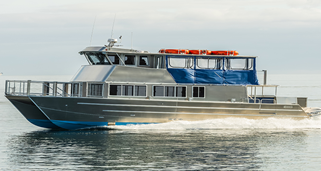
fleet, the Company's fast support vessel fleet also includes several catamaran
vessels capable of transporting more than 100 passengers at exceptional speeds,
complementing its broader FSV fleet with a unique and highly specialized
capability. The Company also owns the middle east premium liftboats, which
should be sold for north of $50 million each to the right bidder. It is my
conviction that a process for them should be in motion now. According to
Clarkson (again, from when the market was 30% below where it is today), the
value of the PSVs alone is $11 per share. If we add the FSV fleet, we get for
these two segments minimum $15 per share or double the current market price.
Recent market transactions further demonstrate the strength of the current
asset environment. Earlier this year, three older premium PSVs with less
capable specs changed hands for $28 million per vessel. In addition, Tidewater
has publicly presented for years its analyses indicating that in order to
justify, from a return perspective, a newbuilt that would cost them $65
million, they would need to charter the boat for day rates of roughly $44,000 per
day. SEACOR has already secured multiple multi-year contracts in Brazil for
several of our own PSVs at day rates exceeding that threshold. As evidenced by
another significant shareholder's public letter earlier this week, patience
with the status quo is wearing thin. The conclusion is clear, you need to
initiate a process to realize the embedded value of our assets. It is your
fiduciary duty and your responsibility to maximize shareholder value, and you
should act immediately so shareholders can realize value now. Unfortunately, we
have been waiting long enough, and the time has come. I welcome the opportunity
to discuss these views with the Board and its advisors. Respectfully, Yoav
Saffar Founder and CIO – Smartlenses Capital LLCJune 26, 2026 Members of the
Board of Directors SEACOR Marine Holdings Inc. SEACOR Marine: The Time Has Come
Dear Members of the Board: Together with my investors, I own approximately 3.5%
of the outstanding shares of SEACOR Marine Holding Inc. (“SEACOR”). Having
first invested in the Company in 2020, I have remained a patient and dedicated
shareholder throughout one of the most challenging periods in its history. My
investment was based on the belief that the market was materially undervaluing
one of the highest-quality offshore support fleets in the industry. I also
believed that, despite one of the worst downturns the offshore service vessel
industry had ever experienced, the Company could preserve the integrity of its
fleet and emerge as a meaningful beneficiary when the cycle inevitably
recovered. That investment thesis has largely played out. Unfortunately, many
of SEACOR's competitors emerged from restructuring with significantly
deleveraged balance sheets and went on to deliver dramatically superior
shareholder returns during the industry's recovery. SEACOR, by contrast,
successfully preserved its core fleet through the downturn but continued to
carry a substantially heavier debt burden, leaving shareholders to bear years
of elevated interest expense and financial constraints. Today, the offshore
service vessel market is experiencing one of its strongest environments in
years. The North Sea, Brazil, and West Africa – all regions where SEACOR has an
established presence – are benefiting from strong day rates, high utilization,
and favorable long-term fundamentals. Yet despite these favorable conditions,
the Company's shares continue to trade at a valuation that is woefully below
the intrinsic value of its fleet and other assets. Back in March 2026, when day
rates were 30% below what they are today, the premier broker Clarkson conducted
a comprehensive valuation analysis and concluded that SMHI stock is worth $22.
The stock is currently trading at about a third of that ($7.55 as of
yesterday). Where does the dislocation come from? Over the years, I have had
numerous discussions with senior management regarding the Company's strategy.
The consistent message was straightforward: be patient. Once the offshore
market recovered, higher utilization and normalized day rates would drive EBITDA
above $100 million, allowing the public market to recognize the intrinsic value
of the Company's assets. Today, the market has recovered. In fact, market
conditions are arguably the strongest they have been in years. Yet the
valuation gap remains. Instead of generating sustainable free cash flow, the
Company continues to struggle with elevated G&A expenses, significant
interest costs, operationally subpar utilization, and other execution
challenges, relying in part on the sale of older non-core vessels at
substantial gains simply to support liquidity. Management had good intentions
and ample opportunity to prove its strategy. Unfortunately, the Company never
had the scale required for that strategy to succeed. When the stock trades at a
third of its value, raising equity to buy boats would be destructive for
current shareholders. With an already highly levered balance sheet, it is
practically impossible to grow inorganically. The Board has been left with an
increasingly limited set of alternatives to maximize shareholder value. The
Company’s premium PSV fleet is its crown jewel. With an average age of only 6.5
years, it is the youngest PSV fleet in the world. Tidewater’s is 14 and
Hornbeck’s is 18 years old. Moreover, the fleet consists of 15 vessels, including
11 premium high-specs PSVs equipped with hybrid battery systems. Even more so,
the Company is scheduled to take delivery of two newly built, state-of-the art
premium PSVs in the fourth quarter of 2026 and the first quarter of 2027, both
equipped with hybrid battery technology. Beyond its PSV fleet, the Company's
fast support vessel fleet also includes several catamaran vessels capable of
transporting more than 100 passengers at exceptional speeds, complementing its
broader FSV fleet with a unique and highly specialized capability. The Company
also owns the middle east premium liftboats, which should be sold for north of
$50 million each to the right bidder. It is my conviction that a process for
them should be in motion now. According to Clarkson (again, from when the
market was 30% below where it is today), the value of the PSVs alone is $11 per
share. If we add the FSV fleet, we get for these two segments minimum $15 per
share or double the current market price. Recent market transactions further demonstrate
the strength of the current asset environment. Earlier this year, three older
premium PSVs with less capable specs changed hands for $28 million per vessel.
In addition, Tidewater has publicly presented for years its analyses indicating
that in order to justify, from a return perspective, a newbuilt that would cost
them $65 million, they would need to charter the boat for day rates of roughly
$44,000 per day. SEACOR has already secured multiple multi-year contracts in
Brazil for several of our own PSVs at day rates exceeding that threshold. As
evidenced by another significant shareholder's public letter earlier this week,
patience with the status quo is wearing thin. The conclusion is clear, you need
to initiate a process to realize the embedded value of our assets. It is your
fiduciary duty and your responsibility to maximize shareholder value, and you
should act immediately so shareholders can realize value now. Unfortunately, we
have been waiting long enough, and the time has come. I welcome the opportunity
to discuss these views with the Board and its advisors.
SEACOR has already secured multiple multi-year contracts in Brazil for
several of our own PSVs at day rates exceeding that threshold. As evidenced by
another significant shareholder's public letter earlier this week, patience
with the status quo is wearing thin. The conclusion is clear, you need to
initiate a process to realize the embedded value of our assets. It is your
fiduciary duty and your responsibility to maximize shareholder value, and you
should act immediately so shareholders can realize value now. Unfortunately, we
have been waiting long enough, and the time has come. I welcome the opportunity
to discuss these views with the Board and its advisors. Respectfully, Yoav
Saffar Founder and CIO – Smartlenses Capital LLCJune 26, 2026 Members of the
Board of Directors SEACOR Marine Holdings Inc. SEACOR Marine: The Time Has Come
Dear Members of the Board: Together with my investors, I own approximately 3.5%
of the outstanding shares of SEACOR Marine Holding Inc. (“SEACOR”). SEACOR has already secured multiple
multi-year contracts in Brazil for several of our own PSVs at day rates
exceeding that threshold. As evidenced by another significant shareholder's
public letter earlier this week, patience with the status quo is wearing thin.
The conclusion is clear, you need to initiate a process to realize the embedded
value of our assets. It is your fiduciary duty and your responsibility to
maximize shareholder value, and you should act immediately so shareholders can
realize value now.
Unfortunately, we have been waiting long enough, and the time has
come. I welcome the opportunity to discuss these views with the Board and its
advisors. Respectfully, Yoav Saffar Founder and CIO – Smartlenses Capital LLC.