




Office Address
123/A, Miranda City Likaoli Prikano, Dope
Phone Number
+0989 7876 9865 9
+(090) 8765 86543 85
Email Address
info@example.com
example.mail@hum.com


123/A, Miranda City Likaoli Prikano, Dope
+0989 7876 9865 9
+(090) 8765 86543 85
info@example.com
example.mail@hum.com
India
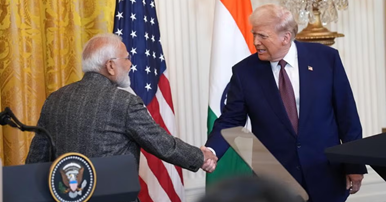
and the United States are racing to close the first tranche of a
long-negotiated bilateral trade agreement before a self-imposed deadline
expires on July 22, when a temporary 10 per cent additional duty on Indian
goods entering the US is due to lapse one way or another. Negotiators on both
sides say the broad architecture of the deal is settled, with only a handful of
contentious clauses left to iron out. US Trade Representative Jamieson Greer
travelled to New Delhi in late June for what both governments described as a
final round of consultations. Sergio Gor, the US Ambassador to India, told
reporters afterwards that the two countries were “in the final steps on this
deal… it’s in the last 1 percent,” language that officials on the Indian side
have not disputed. Commerce ministry sources in Delhi say a joint statement,
rather than a fully signed text, is the more likely outcome by the deadline,
with technical annexes to follow through the rest of the year.
The
current round builds on a framework Prime Minister Narendra Modi and President
Donald Trump announced on February 2, when Washington agreed to cut its
reciprocal tariff on most Indian goods from 50 per cent to 18 per cent. In
exchange, India committed to halt purchases of Russian crude, move toward zero
tariffs on a range of US goods, and pledged to import more than $500 billion
worth of American energy, aircraft, precious metals and technology products
over five years. That framework lowered the immediate temperature in a
relationship that had been strained for much of the past year, but it left
several irritants for this later round of talks to resolve.
Two
issues are proving stickiest. New Delhi wants its residual tariff rate brought
down further, arguing it should not face steeper duties than competing Asian
exporters such as Vietnam and Indonesia, which have secured more favourable
terms in their own agreements with Washington. The US side, in turn, is
pressing India for firmer guarantees that its export supply chains,
particularly in textiles, seafood processing and low-cost manufacturing, are
free of forced or bonded labour, a demand that has taken Indian trade
negotiators somewhat by surprise given it was not a prominent feature of
earlier rounds.
For India’s exporters, the
stakes are considerable. The commerce ministry has set a target of $1 trillion
in overall exports for the 2027 financial year, built on an assumption of 17
per cent growth in merchandise shipments, much of which depends on stable and
predictable access to the US market, still India’s largest single-country
export destination. Sectors from pharmaceuticals and engineering goods to gems
and jewellery have been recalibrating shipment schedules through the summer in
anticipation of whatever tariff structure emerges after July 22, with several
exporters reporting a rush of front-loaded shipments in June and early July to
avoid any interim gap in coverage.
The broader diplomatic context
also matters. Ties between Delhi and Washington had cooled sharply in 2025 over
tariff threats and disagreements on Russian oil purchases, prompting India to
lean harder into trade diversification through agreements with the European
Free Trade Association, Oman, and a UK pact expected to take effect later this
year. A durable US deal would not reverse that diversification, but trade
officials in Delhi say it would remove the single biggest cloud hanging over
exporters’ planning for the year ahead, and restore a degree of predictability
that has been missing from the relationship since early 2025. Whether the two sides make the July 22 date
or need a short technical extension, both governments have signalled they
intend to treat any agreement as a living document, with further rounds
expected later this year to address market access for agricultural goods and
digital trade rules that remain outside the scope of the current text.