BREAKING NEWS
Chennai Port Authority observed V.O.C. Memorial Day
Vigilance Awareness Week 2026 observed by Chennai Port Authoriity and Kamarajar Port.
DHL adds twice-weekly Hong Kong–Navi Mumbai–Liège freighter service
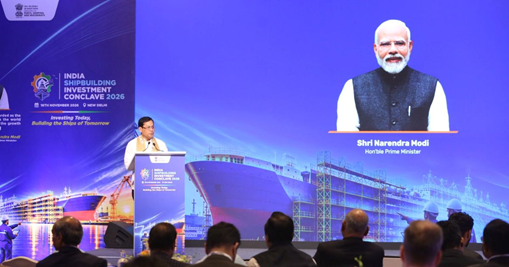
SarbanandaSonowal chairs Global Maritime Leaders’ Open House to strengthen international partnerships in India’s shipbuilding sector/
PM Modi heads to Manila for ASEAN and East Asia Summits; Maritime security, trade and Indo-Pacific Cooperation in focus/
India’s exports to Singapore double as Malaysia and Sri Lanka post sharp gains
Maersk and Hapag-Lloyd return three more Gemini services to Suez
ITF joins ISF Verify initiative to expand digital seafarer certification
India seeks nearly US$10 billion for five coastal shipbuilding clusters
India and Thailand review trade barriers as bilateral commerce reaches US$21.49 billion/
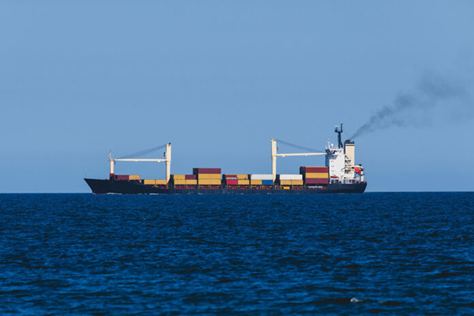
NGOs urge UN Shipping Body to adopt Crucial Climate Agreement before Year End
In order to fulfil the goals of the IMO’s GHG Strategyand to protect our
global climate, the IMO and all its member states must adopt the Net-Zero
Framework ‘as is’, without further diversion”, said Lukas Leppert, President
of the Clean Shipping Coalition. “The product of years of
negotiations, the Net-Zero
Framework reflects findings from the IMO’s Comprehensive
Impact Assessment, is a long-negotiated compromise that brings together a multitude of
interests and positions, and is supported by a broad majority.” “The IMO, as the UN’s shipping agency,
has already committed to a greenhouse gas
strategy, approved a regulatory framework – the NZF – to deliver on its goals,
and prepared its adoption”, added Leppert. “It is
the shipping sector’s best shot at reducing climate warming emissions, and is a
crucial step forward that can become more progressive in the future.” In his November 11 speech to the COP31
Leaders’ Summit, UN Secretary-General
AntónioGuterres said that “fossil fuel interests keep making a
killing… while killing our planet”, and called on leaders to “speed a
just transition away from fossil fuels”, that fossil fuels must go the way
of the dinosaurs” and that “it’s time to kick the habit – and end the
fossil-fuel addiction.”
Adoption of the NZF has been stalled since October of 2025, when a handful of
countries, led by the United States and Saudi Arabia blocked adoption. Several
delegations supportive of the deal received intimidation and threats from US
officials representing the Trump Administration.
While the US political landscape is changing, it remains unclear whether the US
will return to the IMO with the same brash tactics. Countries that supported
the NZF when originally approved, but subsequently came under pressure to
object to its adoption in October 2025, will now likely be reassessing their
positions and wondering if they can again stick to their principles by standing
firm in support of the NZF.
“Threats of sanctions or tariffs will likely ring hollow”, said Leppert. “Other member states
should back them up – a closing or ranks against the naysayers is needed, to
render irrelevant those who wish to undermine the inevitable mark of progress
towards cleaner shipping and decarbonisation.” “Since October 2025, when IMO member
states voted to adjourn the adoption session for one year, various alternative
proposals to the NZF were introduced and intensively discussed, but were
neither able to demonstrate a comparable reduction in emissions nor gather
sufficient support”, added Leppert.
“These alternative proposals aimed at supplanting or distracting from the
NZF have fallen away, proving the NZF as the best course ahead.” “In the more than 12 months delay in
adoption of the NZF, the world has seen increased climate impacts: floods,
droughts, heatwaves, and wildfires”, said Leppert. “While UNEP’s Limiting Overshoot Spotlight Report
shows the consequences of global inaction – that global warming is expected to
cross 1.5°C, this can be reversed by getting on an ‘overshoot, peak, and
decline’ pathway and the shipping sector must take the lead in doing so.” “There is no longer time for going in
circles;.every IMO member state must get behind the Net-Zero Framework and
adopt it before the year ends”, concluded Leppert. Background:
The shipping sector makes up 2-3% of global greenhouse gas emissions – pumping
1 billion tonnes of GHGs into the atmosphere every year, comparable to the
world’s fifth biggest emitting country, Japan. The IMO has committed to
achieving its GHG Strategy
goal, including its long-term goal of decarbonisation by 2050, its interim
targets of a 30% reduction in absolute emissions by 2030 and 80% by 2040, and
its commitment to a just and equitable transition.
Approved during MEPC 83 in April 2025, the NZF includes a “global fuel standard” (GFS), which requires ship operators to gradually decrease the amount of greenhouse gas emitted by shipping fuels – or pay penalties. The framework also introduces a mechanism that puts a price on a portion of greenhouse gases ships emit, giving the industry a clear financial incentive to reduce emissions in line with the global fuel standard. Adoption of the NZF, planned for October 2025’s MEPC/ES.2, was postponed for over a year, due to pressure from IMO member states such as the US and Saudi Arabia
Related News