




Office Address
123/A, Miranda City Likaoli Prikano, Dope
Phone Number
+0989 7876 9865 9
+(090) 8765 86543 85
Email Address
info@example.com
example.mail@hum.com


123/A, Miranda City Likaoli Prikano, Dope
+0989 7876 9865 9
+(090) 8765 86543 85
info@example.com
example.mail@hum.com
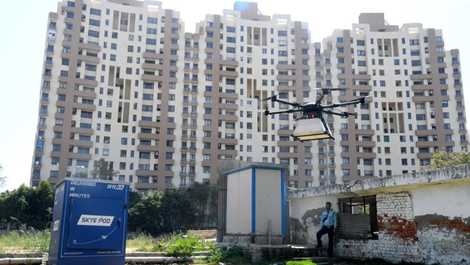
While drone rules significantly, especially for
testing and R&D, start-ups say there is no comprehensive framework yet for
full-scale commercial drone operations.
As India’s economy chases
faster delivery cycles, drones are increasingly becoming part of the last-mile
logistics solution—especially in e-commerce, quick commerce and healthcare
sectors. With the regulatory permissions under Drone Rules 2021, start-ups are
now piloting and scaling drone-based deliveries in metros and remote areas
alike. “The three large sectors
where we have been doing last-mile logistics are e-commerce, healthcare and
quick commerce,” said Ankit Kumar, Founder of New Delhi-based Skye Air
Mobility. “E-commerce is taking off in a massive manner as more companies work
with us to reach customers faster...On a daily basis, Skye Air handles nearly
6,500 orders, with each drone carrying payloads below 10 kg. Around 40 per cent
of its quick commerce drone flights are
“batched”, meaning multiple shipments are combined in a single run—bringing in
greater cost and time efficiency compared to traditional ground-based methods.
Skye Air also operates drone
routes for medical deliveries, ferrying medicines from Central Medical Stores
to primary and tertiary healthcare centers. It uses drones with 2 kg and 6 kg
payload capacities to cover distances of up to 100 km, depending on the route. Return trips often involve collecting
blood samples for testing at district-level hospitals, bridging the
infrastructure gap at smaller centers that lack lab facilities.
“Unlike urban deliveries,
healthcare deliveries often require covering longer distances with sensitive
payloads. That’s where drone technology proves critical,” Kumar said. Several drone-tech start-ups are now eyeing
commercial-scale applications. Airbound, a Bengaluru-based firm, is
preparing to launch its operations in the healthcare sector. “Right now,
drone deliveries cost about ₹100 per km. That’s far from efficient,” said Naman
Pushp, Founder and CEO, Airbound. “We’ve been focused on building technology
that powers highly- efficient aircraft.” Airbound’s broader ambition is
to make drone delivery viable across use-cases—from medical to e-commerce...While
India has liberalised drone rules significantly, especially for testing and
R&D, start-ups say there is no comprehensive framework yet for full-scale
commercial drone operations. “There
are provisions for test flights, but scaling operations for large customers
lacks regulatory clarity,” Pushp said. Airbound is working closely with the
Directorate General of Civil Aviation to help shape a roadmap for broader
commercial adoption....
As
drone tech continues to evolve and find footholds in critical sectors, industry
stakeholders agree that a clearer regulatory roadmap and on-ground
infrastructure will be key to making last-mile drone delivery a scalable
reality.