

Office Address
123/A, Miranda City Likaoli Prikano, Dope
Phone Number
+0989 7876 9865 9
+(090) 8765 86543 85
Email Address
info@example.com
example.mail@hum.com


123/A, Miranda City Likaoli Prikano, Dope
+0989 7876 9865 9
+(090) 8765 86543 85
info@example.com
example.mail@hum.com
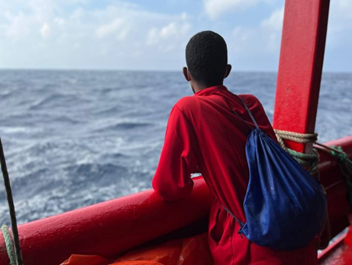
A new report from
the ITF Seafarers’ Trust and the World Maritime University (WMU) highlights the
continuing absence of shore leave for the world’s seafarers. Analysing the data
from 5,879 seafarers who responded to the trust’s shore leave survey, WMU
researchers concluded that more than a quarter of seafarers did not get any
shore leave at all, and a third only got ashore once or twice during their
entire contract, based on an average of 6.6 months onboard.
The ITF Seafarers’ Trust opened the shore leave survey
in mid-2024 to test the concern that shore leave seemed to be progressively
harder to access.
Working with the
team at the WMU to analyse the data, the resulting report seeks to give a true
picture of the current levels of shore leave available to seafarers, how often
it happened, how long it lasted, and to look at possible barriers.
The report paints a
sorry picture of access to shore leave and shore-based services. Officers were least likely to get shore
leave, and seafarers on offshore vessels and tankers were the least likely to
get ashore. Across all respondents, even when seafarers did get shore leave,
47% were able to spend less than three hours ashore and overall, 93.5% spent
less than six hours ashore. The data
shows that the barriers to shore leave are multiple and systemic: minimal
crewing and high workloads, increasing inspections, port security and
operational efficiencies leading to lack of time in port, lack of shore-based
facilities and costs of transport. All these and multiple other issues result
in a situation where the current system means that for seafarers to recuperate
with shore leave is an unattainable dream in many ports.
Katie Higginbottom, head of the ITF Seafarers’ Trust,
said: “...We hope that the
findings will promote discussion and acknowledgement that seafarers deserve a
break from the vessel. Action must be taken to preserve the possibility of
shore leave.”
At a time when mental health and well-being are
recognised as important considerations for seafarers’ health and safety on
board, access to shore leave should be promoted to ensure the safe management
of the vessel, the 47-page report states, adding that given the looming crew shortages, affording decent
opportunities for relaxation from work should be a priority for attracting and
retaining crew. “All
stakeholders, from flag states to port states, agents to shipping companies and
seafarers themselves, need to recognise that the current regime is leading
towards the extinction of shore leave as a viable concept,” the report urges.