

Office Address
123/A, Miranda City Likaoli Prikano, Dope
Phone Number
+0989 7876 9865 9
+(090) 8765 86543 85
Email Address
info@example.com
example.mail@hum.com


123/A, Miranda City Likaoli Prikano, Dope
+0989 7876 9865 9
+(090) 8765 86543 85
info@example.com
example.mail@hum.com
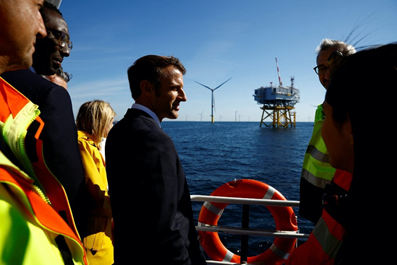
French President Emmanuel Macron called the
European Union’s remaining energy imports from Russia “very marginal,”
challenging Donald Trump’s calls for the bloc to reduce its dependence if it
wants the US to step up pressure on Moscow to end the war in Ukraine.
“This is not a key driver today,” Macron said in an
interview with CBS’s Face the Nation broadcast Sunday.(21 Sep)
“We decreased by more than 80% the
consumption of oil and gas.”
The US president last week repeatedly called for
European allies to stop purchasing Russian oil, suggesting he’d consider
additional measures against Russia “but not when the people that I’m fighting
for are buying oil from Russia.”
One US proposal that’s
been advanced calls for so-called secondary tariffs of as much as
100% on goods from China and India as well as other trade restrictions meant to
curb the flow of Russian energy and prevent the transfer of dual-use
technologies into Russia.
While the EU as a whole has cut Russian energy
imports since President Vladimir Putin’s full-scale invasion of Ukraine in
2022, some member countries remains highly dependent. Slovakia and Hungary have said
they’ll resist pressure from Trump to cut Russian oil imports until the EU
finds sufficient alternatives.
The EU has already passed a ban that will prohibit
importing petroleum products refined from Russia crude starting next year, and
the bloc is discussing banning imports of Russian liquefied natural gas from
2027.
Asked whether he favors further sanctions or
tariffs on Russia, Macron acknowledged “it doesn’t just depend on me.” “If it
depends just on me, tomorrow,” he said.
As momentum builds in Europe to expand the use of frozen
Russian assets to finance Ukraine, Macron sounded a cautious note.
“Regarding the frozen assets, we are all very much
attached to be compliant with international rules,” he told CBS. “And you
cannot seize these assets from the central bank even in such a situation.”
Most of the roughly
$300 billion in frozen Russian assets are in Europe. European Commission
President Ursula von der Leyen suggested this month that the cash balances
could be used to provide Ukraine with a “reparations loan.”