
Office Address
123/A, Miranda City Likaoli Prikano, Dope
Phone Number
+0989 7876 9865 9
+(090) 8765 86543 85
Email Address
info@example.com
example.mail@hum.com


123/A, Miranda City Likaoli Prikano, Dope
+0989 7876 9865 9
+(090) 8765 86543 85
info@example.com
example.mail@hum.com
What was
all-too-recently framed as a future challenge to tackle with a “silver bullet”
solution, is now an immediate operational fact, calling for continuing action
across the maritime industry.
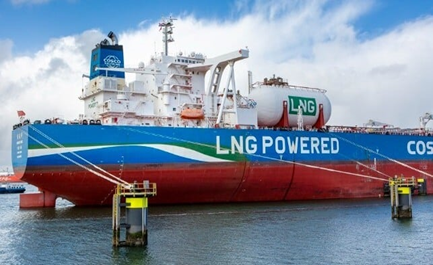
With LNG-powered
vessels ordered in 2025 accounting for 79% of alternative-fueled tonnage, up
from 67% in 2024, the LNG-powered global fleet both operating and on-order,
including LNG carriers, today represents 10% of the global fleet by dead weight
tonnage. From a niche solution used by vessels in Northern Europe and the
Americas in 2016, today, LNG is a globally utilized mainstream marine fuel. Its
energy density, availability, lower costs of regulatory compliance and
commercial optionality give it an advantage over other alternative marine fuels.
2025 was the year that the idea of LNG as a
transition fuel - from fossil LNG through liquefied biomethane (liquefied
renewable natural gas RNG) to liquefied e-methane - really gained momentum,
with record amounts of RNG powering global shipping today and more growth expected.
Shipowners and
operators continue to navigate a complex landscape. While the IMO continues to
work on a practical and realistic forward emissions strategy, the introduction
of regional frameworks such as FuelEU Maritime and the EU Emissions Trading System
(EU ETS) are adding significant operational complexity and cost of
noncompliance.
Any global regulation
must also be progressive as we move to the ultimate clean goals…Liquefied RNG can be used within existing LNG-ready
infrastructure, including bunkering, therefore it offers an immediate runway to
lower emissions and allows for a progressive solution that can be commercially
and financially acceptable.
The IEA’s May 2025
report, “Outlook for Biogas and Biomethane,” states that biomethane is an underutilized
resource in the energy transition. It is currently growing at a rate of 20% per
annum and the IEA estimates some one trillion cubic meters of biomethane could
be produced every year using organic waste streams. This would be the
equivalent of around 25% of the total global natural gas demand today, yet only
around 5% of the total potential for biogas and biomethane production is
currently being utilized.
Confirming the IEA’s analysis, Europe, North
America and Asia are seeing particularly rapid uptake of liquified RNG, and
major carriers have begun integrating liquefied RNG into their fuel mix, taking
advantage of its drop?in compatibility with existing LNG?fueled vessels and
bunkering infrastructure.
For example, in
September 2025, Hapag-Lloyd and Shell signed a multi-year agreement for the
supply of liquefied biomethane starting with immediate effect. Since 2024,
Shell has expanded its offering to include liquefied biomethane, available at
22 strategic locations within its global LNG bunkering network…The liquefied biomethane was used in 2025 and will
be throughout 2026 on a route between Rotterdam and Singapore.
Importantly, suppliers like Shell, Titan and Gasum, to name a few, have broadened their
bunkering operations in Europe, adding to the global expansion of LNG bunkering
infrastructure…Within the LNG pathway, methane slip has been an issue. With
technical efforts under way, the industry expects slip to be essentially
resolved by 2030. Much of this can be seen in technical advancements initiated
by the Methane Abatement in Maritime innovation initiative (MAMii) which has begun a process
of piloting methane abatement technologies, with the ultimate aim of
reducing and eliminating slip.
As we look ahead to 2026 and beyond, the maritime industry will continue to decarbonize and provide other environmental benefits. The use of LNG and methane products is also a major contributor to cleaner air as SOX and NOx are dramatically reduced and particulate matter is essentially eliminated. Further, the expanded use of renewable products is a boon to the world’s issues with waste and supports the circular economy.
The need for a single
global decarbonization framework is clear and the framework must be goal-based
and technology-neutral. It must allow some flexibility over time so companies
can effectively plan their fleet modernization….