

Office Address
123/A, Miranda City Likaoli Prikano, Dope
Phone Number
+0989 7876 9865 9
+(090) 8765 86543 85
Email Address
info@example.com
example.mail@hum.com


123/A, Miranda City Likaoli Prikano, Dope
+0989 7876 9865 9
+(090) 8765 86543 85
info@example.com
example.mail@hum.com
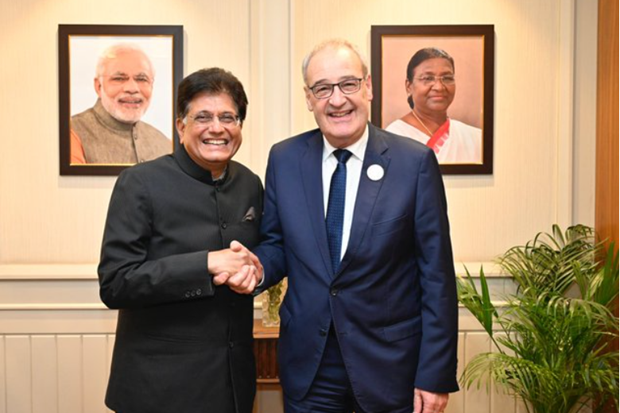
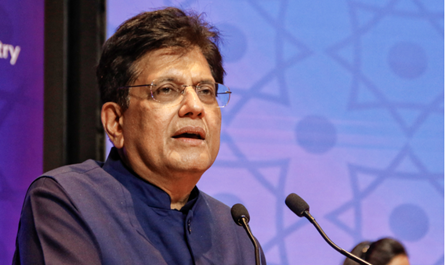
Highlighting India’s growth trajectory, Shri Goyal
noted that under Prime
Minister Shri Narendra Modi’s leadership, India is now the
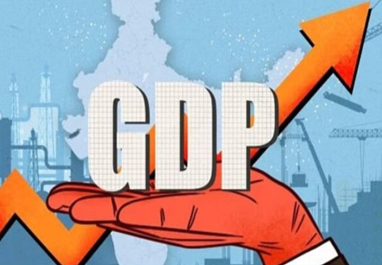
world’s fourth-largest economy, with an estimated GDP of USD 4.51 trillion in
2026. He underscored India’s scale, sustained reform momentum, a large and
expanding consumer market, a deepening industrial base, and continued focus on
ease of doing business, digitisation, and infrastructure-led competitiveness,
which together provide a stable and scalable platform for long-term
partnerships. The Minister encouraged greater Swiss investment in India,
particularly in sectors where Switzerland has established niche technological
strengths. He also underlined India’s role as a reliable global supplier of
affordable, high-quality medicines and vaccines, and called for deeper
cooperation in R&D, biotechnology, specialty pharmaceuticals, and advanced
therapeutics.
The meeting
reaffirmed India and Switzerland’s commitment to expand economic and strategic
cooperation under the
India–EFTA Trade and Economic Partnership Agreement (TEPA). In
the context of the AI Impact Summit, both sides noted the need to balance
innovation with responsibility, and recognised TEPA as an enabling framework
for technology and innovation collaboration, including precision engineering,
health sciences, renewable energy, and R&D.
TEPA is India’s first trade agreement with the EFTA
economies (Iceland, Liechtenstein, Norway, and Switzerland), which are
characterised by high-income markets, exacting standards, and strong demand for
quality products and services. It is also India’s first operational trade
arrangement with a European economic bloc, complementing our engagements with
the European Union and the United Kingdom. The Agreement is expected to support
deeper integration of “Make in India” products into European value chains, with
Switzerland as an important gateway market, while expanding opportunities
across farmers and fishermen, forest-based communities, workers, women and
youth, as well as MSMEs and professionals.
Under TEPA, EFTA has offered improved market access on
92.2% of its tariff lines, covering 99.6% of India’s exports, along with tariff
concessions on processed agricultural products. The Agreement is expected to
create opportunities across Indian states, including Maharashtra (grapes),
Karnataka (coffee), Kerala (spices and seafood), and the North Eastern States
(horticulture). India has safeguarded sensitive sectors such as dairy, soya,
and coal to protect farmers, MSMEs, and businesses. Sensitivities linked to
PLI-supported sectors, including pharma, medical devices, and processed food,
have also been addressed. TEPA carries an agreed ambition to facilitate USD 100
billion in investments into India and support the creation of one million
direct jobs.
Both sides
reaffirmed their commitment to strengthening regulatory cooperation and
institutional engagement to realise TEPA’s full potential. Shri Goyal
highlighted the dedicated EFTA Desk at Invest India as a facilitation mechanism
for Swiss companies seeking to expand their presence in India.
Both leaders expressed confidence that sustained
high-level engagement would advance commercial outcomes and contribute to
long-term prosperity for both countries.