

Office Address
123/A, Miranda City Likaoli Prikano, Dope
Phone Number
+0989 7876 9865 9
+(090) 8765 86543 85
Email Address
info@example.com
example.mail@hum.com


123/A, Miranda City Likaoli Prikano, Dope
+0989 7876 9865 9
+(090) 8765 86543 85
info@example.com
example.mail@hum.com
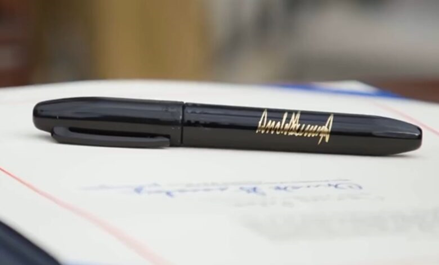
On Friday, (20 Feb)the US Supreme Court ruled that president Donald
Trump violated federal law by using the International Emergency Economic Powers
Act (IEEPA) to unilaterally impose sweeping global tariffs. In response, Trump
announced later that day that he would invoke Section 122 of US trade law to
implement a 10% tariff on all goods imported into the US.
On Saturday, he raised the tariff to 15%, which is scheduled to come
into force on February 24. However, under Section 122, such measures are
temporary and require congressional approval after 150 days to remain in place.
Yale University’s Budget Lab estimates the change reduces the overall
effective US tariff rate by only 2%.
Impact varies by
country – a five percentage point reduction for China and Vietnam, no change
for the EU, a 5% increase for the UK, and the most significant reduction for
Brazil, down from 40%. Overall effective tariffs on China remain around 40% due
to pre-existing Section 301 duties.
“Significantly lower effective tariff rates are likely
to spur shipments out of places like Brazil. And some importers out of China
and Vietnam may be enticed by the 5% dip in tariffs to increase orders too. But
the overall modest reductions and high uncertainty may limit the surge compared
to last year’s frontloading waves, with any pickup likely starting in early
March as manufacturing resumes post-Lunar New Year,” said Judah Levine, head of
research at Freightos, a box booking platform.
“Shippers and carriers are less than one week away from the annual gathering
at the TPM conference in Long Beach, which typically serves as the kick-off for
many contract negotiations. It will be next to impossible for any US shippers
to commit firmly to volumes or specific origin/destination pairs over the next
12 months, given the tariff turmoil,” pointed out analysts at Danish container
consultancy Sea-Intelligence.
Danish container shipping expert Lars Jensen, who runs consultancy
Vespucci Maritime, wrote in a social media post today that shippers involved in
US trades will be having a busy morning trying to get an overview of what the
IEEPA shut-down and the new 15% global tariffs will mean – and whether their
cargo is part of the very lengthy list of exceptions from the 15%.
Lengthy in this context means that Annex 1 and Annex 2 contains
approximately 1,800 commodity codes exempt from the 15% tariff, Jensen
explained citing various fresh fruits, coffee, laptops, jet fuel and
helicopters as some examples.
China lashed out at US trade policies last week,
accusing Washington of weaponising tariffs and export controls and calling for
urgent World Trade Organization (WTO) reform to restore predictability in
global trade.
In a strongly worded submission to the WTO, Beijing blamed recent US
measures — from unilateral tariffs to tightened technology export rules — for
fragmenting supply chains and undermining the multilateral rules‑based
system.
“Selective protectionism and extraterritorial controls are destabilising
trade and hurting global growth,” the Chinese submission stated, adding that
Beijing would “vigorously defend the legitimate rights of Chinese enterprises.”
As tensions with Washington simmer, Chinese officials set out a package of WTO fixes they say would blunt geopolitical interference and modernise the system. Recommendations include restoring a fully functional dispute‑settlement mechanism, tightening transparency and notification requirements for export controls and subsidies, and creating fast‑track procedures for disputes involving critical supply chains and dual‑use technologies.