

Office Address
123/A, Miranda City Likaoli Prikano, Dope
Phone Number
+0989 7876 9865 9
+(090) 8765 86543 85
Email Address
info@example.com
example.mail@hum.com


123/A, Miranda City Likaoli Prikano, Dope
+0989 7876 9865 9
+(090) 8765 86543 85
info@example.com
example.mail@hum.com
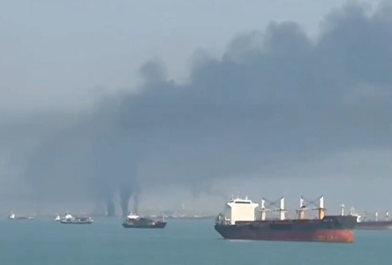
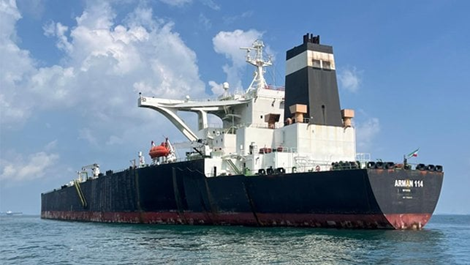
The Bahamas-flagged tanker Sonangol Namibe has just been attacked while at
anchor approximately 30 nautical miles southeast of Mubarak Al Kabeer, Kuwait.
The master reported a massive explosion on the port side followed by the
departure of a small craft. According to alerts from the UK Maritime Trade
Operations (UKMTO) and security specialist Vanguard, the vessel has taken on
water and oil has been observed leaking from a damaged cargo tank. The location of the strike, Mubarak Al
Kabeer, is situated some 750–800 km from the Strait of Hormuz, the waterway
Iran claims to have blocked. This suggests a strategic widening of Iranian
strikes, which had previously been concentrated in the strait, Bahrain, and the
Gulf of Oman. “There could be some environmental impact,” UKMTO warned, though
the crew is reported safe. Further south, the 1,740 teu containership Safeen Prestige was struck by a projectile north
of the Omani Musandam Governorate, suffering an engine fire. Splash records
indicate that at least 10 commercial ships have now been targeted since the war
began.
The tanker market is currently defined by a “stalemate” as ships pile up
on both sides of the Hormuz Strait. Broker Fearnleys reports that while rate
estimates for loading in the Middle East Gulf or Saudi Red Sea have
“skyrocketed,” the figures remain largely academic. “No cargoes have been
physically lifted since the war broke out,” Fearnleys noted, describing current
Baltic rates as a “guestimate” by the broking community while the physical
trade remains frozen.
The gas sector is facing even tighter constraints. Qatar declared force majeure on gas exports on
Wednesday, a move that could remove 20% of the global LNG supply for at least a
month. Consequently, LNG spot rates have surged to over $300,000 per day, a
ten-fold increase from the $30,000 seen just last week.
In the liner sector, the crisis is beginning to leave
a measurable footprint on schedules. Analysis from TimeToCargo shows average
arrival delays for Asia-Europe flows have increased from 2.26 to 3.73 days.
However, certain carriers are feeling the heat more than others; HMM has seen
average delays jump from 3.72 days to 10.45 days, while MSC’s delays have risen
to nearly five days.
The situation is most acute at Jebel Ali, where departure delays have
spiked to 4.2 days from a pre-war average of 0.72. Many carriers are now opting for the longer, more
predictable route via the Cape of Good Hope to avoid the carnage. Disruption is
likely to begin to build at major transhipment ports in Asia, something seen in
earlier shipping crises this decade, including covid and the Houthis’ campaign
in the Red Sea.
The financial cost of sailing into the conflict
zone has become prohibitive. According to the Financial Times,
the cost of insuring a ship through the Strait of Hormuz has soared 12-fold.
Shipowners are now being quoted premiums as high as 3% of a vessel’s total
value—up from 0.25%.
In response, Donald Trump has vowed to use the US Development Finance
Corp to provide war risk insurance and guarantees. He also announced that the
US Navy would begin escorting tankers “as soon as possible.” However, industry
experts remain sceptical. Jakob
Larsen, BIMCO’s chief safety and security officer, noted that while escorts
reduce threats, providing protection for all tankers is “unrealistic” given the
number of warships required. He suggested that if the Iranian threat is
significantly degraded, escorts might eventually push risks below the
“acceptance level” for some owners.
Shipbroker SSY added further caution, noting that the US Navy has
privately signalled a lack of escort capacity until the initial stages of military
operations are complete. Furthermore, US law restricts the navy from escorting
ships that are not US-flagged or American-owned. SSY pointed to the Red Sea
precedent, where 15 months of naval escorts failed to restore commercial
traffic despite downing 400 missiles. “Physical geography favours the
attacker,” SSY warned, noting that a destroyer cannot simultaneously counter
drone-boat swarms, sweep mines, and manage GPS disruption in the narrow
two-nautical-mile-wide transit lanes.
With supplies of energy out of the Middle East
under pressure, many nations are taking precautionary steps. Myanmar, for
instance, has instituted an odd/even ruling for cars, where cars with number
plates that start with an even number can only drive on an even date and vice
versa with odd numbers.
In China, meanwhile, the National Development and Reform Commission
(NDRC) convened a meeting to discuss the export of refined oil products
yesterday. A verbal request was made to temporarily suspend, effective
immediately, all refined oil product exports, except for three categories –
bonded aviation kerosene, bonded marine fuel, and supplies to Hong Kong and
Macau. Three requirements were put forward: first, suspend the signing of new
export contracts; second, try to negotiate the cancellation of contracts
already concluded and with scheduled shipping; and third, it was advised not to
export contracts already concluded but without scheduled shipping.