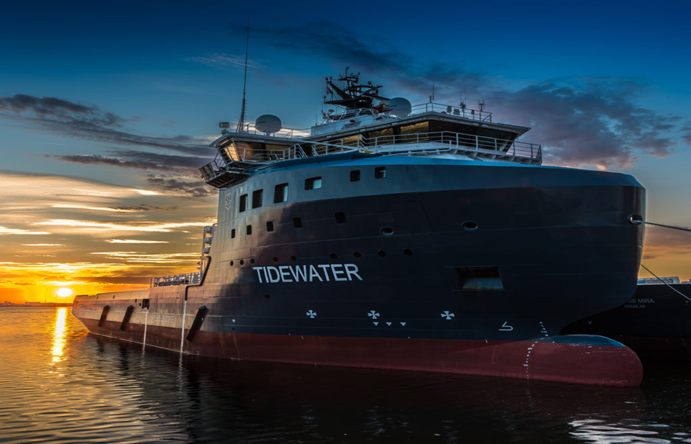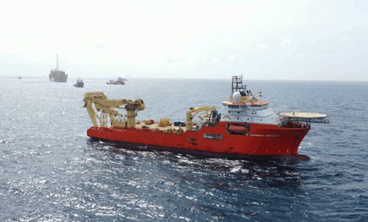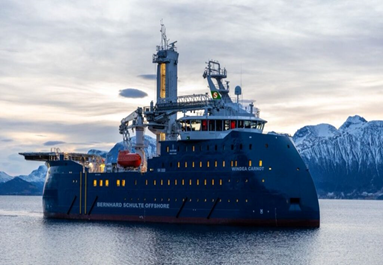
Bernhard Schulte Offshore takes delivery of CSOV Windea Carnot
The vessel was built by Ulstein Verft in Norway for an institutional
investor and was formally handed over to BSO upon completion. The ship was
christened on 6 March 2026.
Windea Carnot is the third of a series of sister vessels
delivered from Ulstein to BSO since mid-2025, following Windea Curie and Windea
Clausius. With the addition of the new vessel, BSO’s fleet now includes six
specialised ships serving the offshore energy sector.
Matthias Müller, Managing Director at Bernhard
Schulte Offshore, said: “The offshore
market offers promising prospects. Therefore, we are pleased to have added
‘Windea Carnot’ to our portfolio. The Ulstein design, characterised by
reliability, flexibility and innovative features, is very well received by the
offshore industry.”
The CSOV features Ulstein’s TWIN X-STERN configuration, a design
intended to improve manoeuvrability, reduce vessel motion and enhance fuel
efficiency during offshore operations. The vessel also incorporates hybrid
battery propulsion and is prepared for future conversion to methanol fuel. The design allows the ship to support both
operations and maintenance (O&M) activities as well as construction work in
offshore wind farms and other offshore energy installations.
Windea Carnot is configured to accommodate up to 90
offshore personnel in single cabins. The vessel includes a centrally
positioned, height-adjustable walk-to-work gangway with an elevator tower to
enable safe transfer of personnel and cargo between the vessel and offshore
structures.
Additional equipment includes a helideck capable of
handling helicopters with a maximum take-off weight of 8.6 tonnes and a 3D
motion-compensated crane with a lifting capacity of up to five tonnes for
offshore lifting operations. The vessel also incorporates a
height-adjustable boat-landing system to enable step-free transfer between the
CSOV and crew transfer vessels operating within offshore wind farms.
The vessel is named after Nicolas Léonard Sadi Carnot, a scientist known
for his contributions to thermodynamics. The naming follows the theme used for
its sister vessels, which are named after prominent scientists.

Related News