




Office Address
123/A, Miranda City Likaoli Prikano, Dope
Phone Number
+0989 7876 9865 9
+(090) 8765 86543 85
Email Address
info@example.com
example.mail@hum.com


123/A, Miranda City Likaoli Prikano, Dope
+0989 7876 9865 9
+(090) 8765 86543 85
info@example.com
example.mail@hum.com
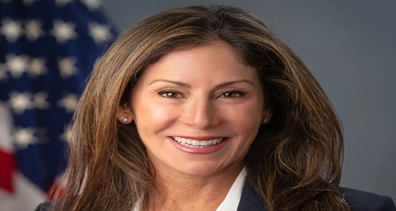
Federal Maritime
Commission (FMC) Chairman Laura DiBella participated as part of the U.S. Delegation to MEPC
84, where she says, she helped reinforce constructive U.S. engagement to
resolve the NZF impasse. During the week, the U.S. Delegation, including
Chairman DiBella, met with over 20 delegations to encourage member states to
explore all available options to achieve broad consensus. Chairman DiBella
underscored the need for the full IMO membership to consider viable
alternatives submitted by several other countries that would ensure industry
stability while preventing harm to U.S. consumers.
One of those alternatives was proposed in a proposal submitted to the MEPC by Liberia, with the
co-sponsorship of Argentina and Panama. It proposes a revised, pragmatic, and
consensus‑building approach to defining and adjusting the trajectory of the
Global Fuel Intensity (GFI) target.
Expect to hear a lot
more on this approach in the weeks ahead.
“The NZF, championed
by the European Union as a global version of its deeply unpopular regional
Emissions Trading Scheme, would force American consumers to pay a carbon tax
for shipments transiting international waters,” said a statement released by
DiBella. “At the last IMO negotiation in October 2025, a major coalition of
countries representing more than half of the world’s commercial fleet expressed
uncertainty about the NZF’s implementation. As envisioned, ships out of
compliance with the NZF’s strict fuel standards, which would have impacted 97%
of the global fleet, would be liable to pay the tax, and these charges would then
be passed along to consumers. After a
series of bilateral discussions, Chairman DiBella concluded that although NZF
proponents may believe they have engaged in meaningful negotiations with all
parties in the IMO, in reality the insistence of a minority bloc had previously
overwhelmed the silent majority, until this week at the MEPC, when that silent
majority finally found its voice.
“The U.S. will explore
all potential remedial options to protect American consumers from a disputed
and unneeded global carbon tax,” said the statement. “Chairman DiBella will
ensure that the FMC’s role and statutory authorities remain at the forefront of
the discussion, to include the Commission’s ability to monitor flag states that
establish or follow laws or regulations that result in unfavorable shipping
conditions in U.S. foreign trade.”
The International Chamber of Shipping (ICS), which
has long advocated for proposals along the lines of the NZF, released this
statement:
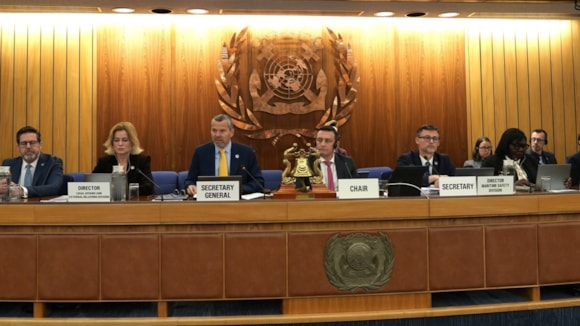
This week’s
International Maritime Organization (IMO) Marine Environment Protection
Committee meeting (MEPC 84) saw further deliberation between IMO Member
States on the future of the draft ‘IMO
Net-Zero Framework’ (NZF) to decarbonize international maritime transport. This followed the
Extraordinary Session last October which had postponed a decision on whether to
adopt the NZF for global implementation (subsequent to approval of a draft
regulatory text in April 2025).
At the conclusion of
this week’s MEPC meeting, Thomas A Kazakos, Secretary General
of the International Chamber of Shipping (ICS), made the following comments:
“The constructive
dialogue that has taken place this week is hugely welcome,
although it is clear that many Member States are still unable to adopt a global
regulatory framework unless further adjustments are made.
“The shipping industry
is fully committed to achieving the ambitions of the 2023 IMO
GHG Strategy and has already delivered substantial GHG emissions reductions. It
is
vital that governments move towards adoption of a comprehensive fit-for-purpose
global framework as soon as possible to enable the industry to further
accelerate
its rapid transition to alternative energy sources. “We therefore welcome the decision to convene
additional negotiations in September
to which ICS intends to contribute ideas on a possible way forward to achieve
the
necessary support amongst all Member States.”