



Office Address
123/A, Miranda City Likaoli Prikano, Dope
Phone Number
+0989 7876 9865 9
+(090) 8765 86543 85
Email Address
info@example.com
example.mail@hum.com


123/A, Miranda City Likaoli Prikano, Dope
+0989 7876 9865 9
+(090) 8765 86543 85
info@example.com
example.mail@hum.com

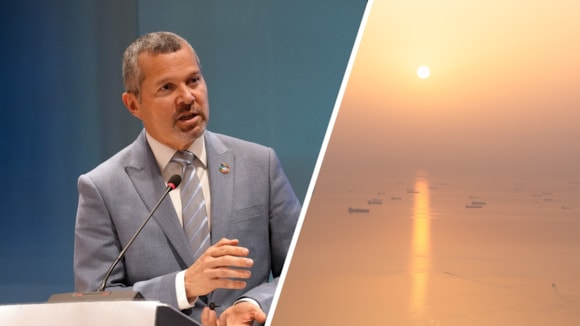
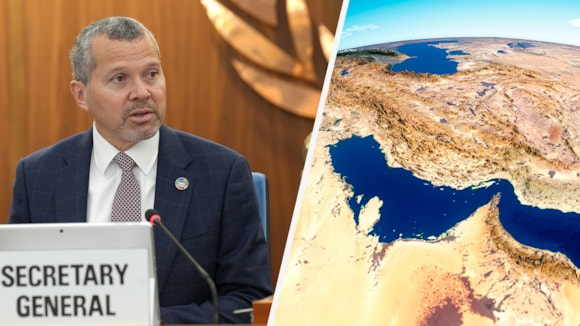
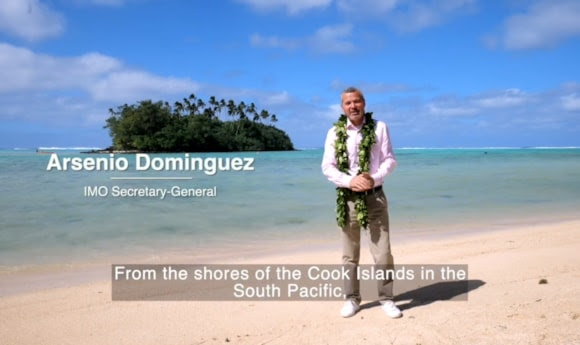
“We are back on track,
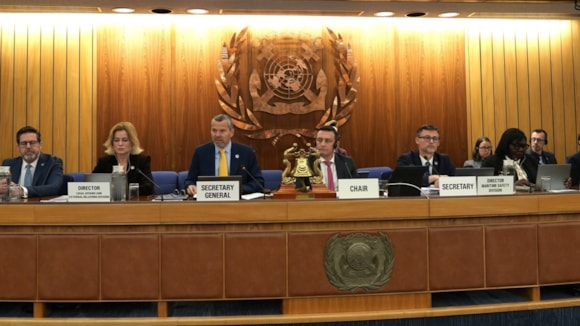
but we have to rebuild trust,” said IMO Secretary-General Arsenio Dominguez. “I
encourage you to maintain this momentum through your intersessional work and to
prepare submissions that can bring the membership together.” According to ABS, key takeaways from MEPC 84 include: Net‑Zero Framework: The committee reaffirmed
the importance of developing a globally applicable IMO Net‑Zero Framework based
on international consensus, while recognizing that further technical and
political work is required. MEPC agreed to continue consideration of the NZF
and alternative proposals on an intersessional basis ahead of MEPC 85. Fifth IMO GHG Study: MEPC
approved the terms of reference for the fifth IMO GHG Study and invited the
secretariat to initiate the nomination process for the steering committee. The
study will update global GHG inventories and projections and will support the
future review of the 2023 IMO GHG Strategy.
Life‑Cycle GHG Assessment: The committee progressed work on
the IMO LCA framework, including default emission factors, fuel pathway
developments, and methodological treatment of carbon capture technologies.
GESAMP‑LCA was instructed to continue technical refinements and report to MEPC
85. Energy Efficiency and Air
Pollution: MEPC adopted amendments and guidelines related to IMO DCS
accessibility, EEDI/EEXI, and emissions measurement and monitoring, and noted
continued improvement in fleet‑wide carbon intensity. Onboard Carbon
Capture: The committee advanced draft guidelines on the testing,
approval, survey and certification of onboard carbon capture systems, agreeing
on a technology‑neutral, step‑wise approach.
Ballast Water Management: MEPC approved draft amendments to
the BWM Convention Annex and associated guidelines, enhancing requirements on
system operation, maintenance, certification, and challenging water
quality. New Emission Control Areas:
The committee adopted the North‑East Atlantic Emission Control Area and
approved protective measures for designated PSSAs.
Other notable outcomes:
Amendments on Integrated Bilge Water
Treatment Systems (IBTS) under MARPOL Annex I.
Agreement to develop a legally binding biofouling framework by 2029.
Adoption of the 2026 Strategy and Action Plan on Marine Plastic Litter.
Measures on underwater radiated noise, ozone‑depleting substances, and
preparatory work on maritime autonomous surface ships (MASS).