


Office Address
123/A, Miranda City Likaoli Prikano, Dope
Phone Number
+0989 7876 9865 9
+(090) 8765 86543 85
Email Address
info@example.com
example.mail@hum.com


123/A, Miranda City Likaoli Prikano, Dope
+0989 7876 9865 9
+(090) 8765 86543 85
info@example.com
example.mail@hum.com
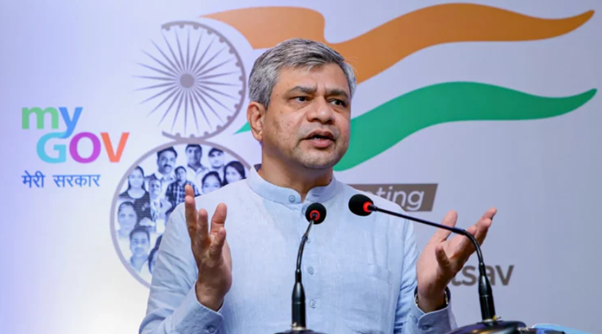
He said the commissioning of the Mumbai
Ahmedabad High Speed Rail Corridor will reduce travel time between the two
cities to 1 hour and 57 minutes. “With the new corridors, Mumbai to Pune travel
time will come down to 48 minutes and travelling from Pune to Hyderabad will be
possible in only 1 hour and 55 minutes,” Vaishnaw said. He shared with the
audience the reduced travel time across all segments of the new high-speed
corridors. “This will be an investment of ₹16 trillion, and practically the
entire investment will be for Indian manufacturers and Indian construction
firms because we have now standardised the entire design and construction
work,” the minister said. Against the backdrop of global
geopolitical uncertainty and continuing conflicts, Vaishnaw urged industry to
respond to the Prime Minister’s latest clarion call by reducing expenditure
that leads to foreign exchange outflow while simultaneously increasing efforts
to earn foreign exchange and strengthen reserves.
Highlighting
the scale of transformation in the railways sector, he said Indian Railways’
annual capital expenditure has increased from around ₹66,000 crore a few years
ago to nearly ₹272,000 crore in the last financial year. He said around 49,000 km of railway
tracks have been electrified, equivalent to the entire railway network of
Germany, and the production of wagons and locomotives has also been boosted by
the government.
The minister also announced the
completion of the Dedicated Freight Corridor project on April 5, despite
multiple implementation challenges. He said the Dedicated Freight Corridor is
currently enabling the movement of nearly 480 trains a day, while reducing
transit time between the hinterland and ports from 48 hours to nearly 12–16
hours. Vaishnaw also said the rail ministry
has addressed the earlier issue of shortage of wagons for coal transport and
coal stocks at the country’s power plants have now risen to 54 million
tonnes. Painting a modern and
transformed image of the national transporter, the minister said Indian
Railways is now exporting propulsion systems, the core equipment supporting
train operations, to many developed nations, including the United States,
Germany and France.