
Office Address
123/A, Miranda City Likaoli Prikano, Dope
Phone Number
+0989 7876 9865 9
+(090) 8765 86543 85
Email Address
info@example.com
example.mail@hum.com


123/A, Miranda City Likaoli Prikano, Dope
+0989 7876 9865 9
+(090) 8765 86543 85
info@example.com
example.mail@hum.com
As international pressure to reduce greenhouse gas
(GHG) emissions from ships intensifies, ammonia-fueled vessels are gaining
traction as a zero-carbon alternative to conventional marine fuels. However,
ammonia’s high toxicity means that ammonia effluent can be generated during
vessel operation, and the absence of internationally agreed management
standards continues to create uncertainty across the industry. To proactively address this regulatory
gap, KR established a joint working group in June 2025 in collaboration with
the Ministry of Oceans and Fisheries (MOF), the Korea Testing & Research
Institute (KTR), and five major Korean shipbuilders — HD Korea Shipbuilding
& Offshore Engineering, HD Hyundai Heavy Industries, HD Hyundai Samho,
Samsung Heavy Industries, and Hanwha Ocean — to build the necessary technical
and regulatory foundations.
Building on this
groundwork, KR partnered with MOF to present relevant technical considerations
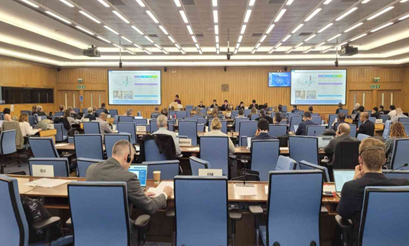
and lead expert session discussions at the 13th session of the IMO Sub-Committee
on Pollution Prevention and Response (PPR 13) in February 2026. As a result,
IMO decided to advance the formal consideration of ammonia effluent to 2027,
ahead of its originally scheduled timeline.
Following the outcomes of PPR 13,
a new expert group on ammonia effluent management has been established. Senior Surveyor KIM Joonghun of KR’s
Convention & Legislation Service Team was appointed as the
Coordinator, and the group held its kick-off meeting on May 7, 2026, with
approximately 100 experts from government agencies, research institutions, as
well as the shipbuilding and shipping industries participating from around the
world.
The group will operate until PPR 14 as a preparatory
body for the development of international guidelines. KR, in cooperation with
MOF, will lead discussions on key agenda items including: the definition and
scope of ammonia effluent; marine environmental impact assessment criteria;
monitoring and record-keeping frameworks; data collection and sharing
arrangements.
In parallel, KR
also serves as the Coordinator of a separate expert group focused on developing
guidelines for NOx reduction strategy failures and associated response
procedures. Deputy Senior Surveyor, KIM
Changkyu of KR’s Convention & Legislation Service Team
leads the discussions, providing practical support to shipowners and port
authorities in implementing international regulations. The outcomes of both groups are expected to
serve as foundational references for the development of international
guidelines at future IMO PPR sessions.
KIM Kyungbok,
Executive Vice President of KR, stated: “KR
will continue to work closely with the Korean Ministry of Oceans and Fisheries,
industry partners, and research institutions to actively drive the
establishment of safe and effective international standards.”