




Office Address
123/A, Miranda City Likaoli Prikano, Dope
Phone Number
+0989 7876 9865 9
+(090) 8765 86543 85
Email Address
info@example.com
example.mail@hum.com


123/A, Miranda City Likaoli Prikano, Dope
+0989 7876 9865 9
+(090) 8765 86543 85
info@example.com
example.mail@hum.com
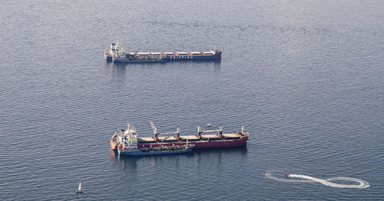
The sanctions target
Iran’s Persian Gulf Strait Authority, a body set up to manage requests for
passage through the Strait of Hormuz and charge transit fees to vessels using
the waterway. Tensions remain high
in the Gulf following the war involving Iran, the United States and Israel.
The Strait of Hormuz normally handles about a fifth
of global oil and natural gas shipments, and restrictions in the area have
increased energy prices and disrupted global shipping operations.
The US Treasury
Department added the Persian Gulf Strait Authority to its Specially Designated
Nationals (SDN) sanctions list through the Office of Foreign Assets
Control. US Treasury Secretary Scott
Bessent said Iran was trying to pressure global maritime trade by tightening
control over the strait. “The Iranian military’s latest attempt to extort
global maritime trade is proof that Economic Fury has left the regime desperate
for cash,” Bessent said in a statement.
The sanctions were announced
after US forces carried out strikes on an Iranian military facility following
the reported downing of Iranian attack drones, according to US officials
speaking on condition of anonymity.
Iran’s Revolutionary Guard has defended the shipping control measures,
saying vessels should use transit corridors designated by Tehran. It also
warned that ships moving outside those routes could face attacks or other
security risks.
Iran earlier published a map reaffirming its claims
over large stretches of water near the Strait of Hormuz.
According to Iranian officials, transit tolls
through the strait could reach up to $2 million per vessel.
President Donald Trump
said negotiations with Iran were continuing despite the latest military
exchanges and sanctions. “They want very much to make a deal,” Trump said
during a Cabinet meeting on Wednesday. “So far, they haven’t gotten
there.” The US has also maintained a
blockade on Iranian ports for more than a month. Trump said the restrictions
would remain until a formal agreement was reached.