



Office Address
123/A, Miranda City Likaoli Prikano, Dope
Phone Number
+0989 7876 9865 9
+(090) 8765 86543 85
Email Address
info@example.com
example.mail@hum.com


123/A, Miranda City Likaoli Prikano, Dope
+0989 7876 9865 9
+(090) 8765 86543 85
info@example.com
example.mail@hum.com
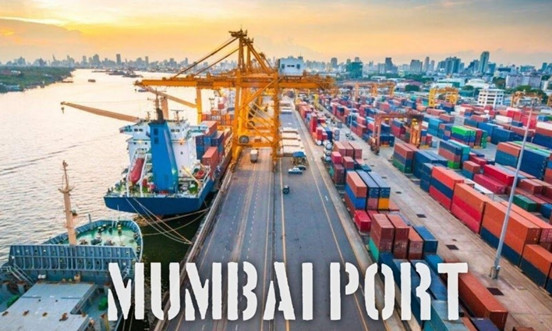
MbPA Chairperson M
Angamuthu said the port is positioning itself as a specialised maritime hub
that complements rather than competes with the nearby Jawaharlal Nehru Port
Authority. “Mumbai Port Authority
and JNPA are complementary national maritime assets rather than rivals,”
Angamuthu said, adding that the port has strengthened its position in liquid
bulk cargo, iron and steel exports, project cargo, automobile exports,
bunkering, ship repair and coastal shipping.
Mumbai Port recorded its highest-ever cargo throughput
of 75.15 MT in FY26, accounting for 8.22 per cent of traffic among India’s
major ports.
Liquid bulk cargo, including crude oil, petroleum
products, chemicals and LPG, remained the dominant cargo segment. Coastal
shipping contributed 10.48 per cent of total traffic, while automobile exports
reached 80,986 units. Project cargo, fertilisers, agri-commodities and
break-bulk cargo also emerged as key growth drivers.
The port aims to handle 85 MT of cargo by FY28,
supported by rising liquid bulk volumes, project imports, automobile exports
and increased anchorage operations.
To support future
growth, MbPA plans investments of ₹15,000–18,000 crore over the next few years
in mechanisation, capacity expansion and sustainable infrastructure. Among the major projects is the
₹800-crore sixth oil berth at Jawahar Dweep, expected to add 22 million tonnes
per annum (MTPA) of capacity. Additional investments include approximately ₹3,000
crore in crude tankage by Hindustan Petroleum Corporation Limited and ₹1,000
crore by Bharat Petroleum Corporation Limited. At Pir Pau, the port is developing a new
2-MTPA fourth chemical berth along with additional storage facilities. It is
also modernising 22 berths at Indira Dock through private-sector-led
mechanisation to improve productivity and vessel turnaround times.
Beyond cargo operations, Mumbai Port is advancing
large-scale waterfront development projects aimed at transforming the city’s
eastern waterfront.
The plans include an ₹877-crore international marina
and a broader ₹22,672-crore eastern waterfront redevelopment programme,
featuring a proposed ₹5,500-crore convention centre.
Of the port’s
nearly 956-hectare landholding along Mumbai’s eastern waterfront, around 253
hectares have been identified for redevelopment. About 193 hectares will be
used for public infrastructure such as promenades, roads, gardens and heritage
spaces, while 60 hectares have been earmarked for commercial and mixed-use
developments. The New Sewri
warehouse site, benefiting from connectivity through the Atal Setu, is also
being evaluated for monetisation through lease or public-private partnership
models. MbPA reported an operating income of approximately ₹2,806 crore and
total income of ₹3,319 crore in FY26. The port generated an operating surplus
of nearly ₹1,731 crore, maintaining a cost per tonne of around ₹143 and an
operating ratio of 38.31 per cent.
According to Angamuthu, the figures reflect the port’s strong financial
health, efficient cost management and capacity to fund future expansion
projects. On the development of the proposed Vadhvan Port, Angamuthu said the new
mega port would complement Mumbai Port’s operations rather than compete with
them. While Vadhvan is being
developed as a major container hub linked to the India-Middle East-Europe
Economic Corridor (IMEC) and the International North-South Transport Corridor
(INSTC), Mumbai Port will continue to focus on liquid cargo, bulk commodities,
coastal shipping and maritime services.
With India’s total port throughput projected to increase from about
855 MT currently to more than 2,000 MT by 2047, Angamuthu said there would be
sufficient demand to support multiple major ports in Maharashtra while creating
new feeder and hinterland opportunities across the region.