

CICT Delivers 2,241-Tonne BESS Cargo to Power Sri Lanka’s Renewable Energy Push
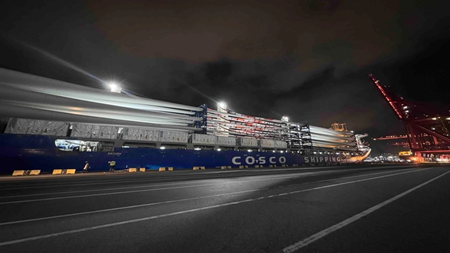
The cargo arrived aboard Da
Xiang, a specialized heavy-lift vessel operated by COSCO Shipping. Each of the
54 units—roughly the footprint of a standard 20-foot container—weighed
approximately 41.5 tonnes, placing them beyond the terminal’s standard RTG lifting
threshold of 40.5 tonnes and demanding bespoke planning across every stage of
the operation. The BESS units are earmarked for installation across 16
substations nationwide as part of a strategic initiative to accelerate
renewable energy integration, improve grid flexibility and reduce Sri Lanka’s
dependence on imported fossil fuels. The project is central to the country’s
target of achieving 70% renewable energy generation by 2030.
Recognizing
the cargo’s strategic weight—both literally and nationally—CICT developed a
dedicated operational plan ahead of the vessel’s arrival. The discharge was
scheduled during a specially planned midnight shift, with two quay cranes,
sixteen prime movers and two reach stackers allocated exclusively to the
operation. Two rubber-tired gantries were placed on standby with modified
lifting configurations as a contingency measure; though ultimately not
deployed, their readiness reflected CICT’s structured approach to risk
management. The operating crew was handpicked for their experience and safety
records, reinforcing the terminal’s commitment to executing the operation
without compromise.
Yard management presented an
equally complex challenge. Under standard operating conditions, a single yard
slot accommodates container stacks up to six units high. For this shipment,
CICT reserved 54 individual ground slots — one per battery unit — with no
stacking permitted. The arrangement enabled direct retrieval for outbound
delivery and eliminated the need for additional cargo sorting or shifting.
Cargo was further segregated by final destination, establishing dedicated
storage zones that streamlined onward transportation to project sites across
the island. CICT CEO Jan Zhang said the
operation demonstrated the terminal’s capability to manage highly specialized
project cargoes requiring meticulous planning, technical expertise and
uncompromising safety standards. “As Sri Lanka accelerates investments in
renewable energy and grid modernization, ports will play a critical role in
enabling the timely delivery of strategic infrastructure,” he said, adding that
CICT was proud to contribute to a project supporting the country’s energy
security, sustainability goals and long-term economic development.
Related News