




Office Address
123/A, Miranda City Likaoli Prikano, Dope
Phone Number
+0989 7876 9865 9
+(090) 8765 86543 85
Email Address
info@example.com
example.mail@hum.com


123/A, Miranda City Likaoli Prikano, Dope
+0989 7876 9865 9
+(090) 8765 86543 85
info@example.com
example.mail@hum.com
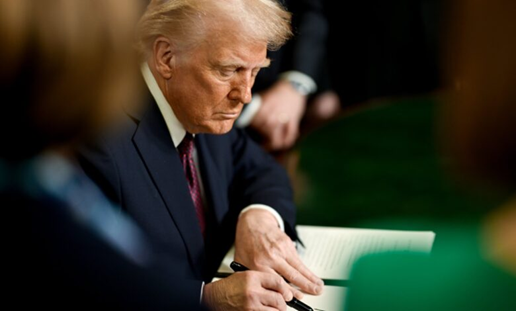
The 14-point “Islamabad Memorandum of Understanding” was signed
electronically by US and Iranian officials and is due to be formally signed on
Friday, triggering a 60-day negotiation period aimed at securing a final
settlement. The agreement immediately halts military operations between the two
sides, commits both parties to refrain from future military action against one
another, and sets out a roadmap for restoring commercial navigation through the
Strait of Hormuz. For the shipping
industry, the most significant provisions relate to the reopening of one of the
world’s most important maritime chokepoints. Under the memorandum, the US will
begin removing its naval blockade immediately and fully end it within 30 days,
while Iran has committed to ensuring the safe passage of commercial vessels
through the Strait of Hormuz free of charge for a period of 60 days. Iran has
also agreed to undertake demining operations and remove technical and military
obstacles affecting navigation. The agreement further states that
commercial vessel traffic should begin immediately, although both sides
acknowledge that restoring flows to pre-war levels will take time. Maritime
experts have already warned that clearing congestion, addressing security
concerns and removing hazards accumulated during the conflict could take
several weeks before normal trading patterns return. Beyond shipping access,
the memorandum includes substantial economic concessions. Washington has
committed to supporting a reconstruction and economic development framework
worth at least $300bn, while also agreeing to issue waivers allowing Iranian
crude oil exports, petroleum products, associated banking services, insurance
and transportation activities to resume. The agreement also outlines plans to
make frozen Iranian funds available and establishes a pathway toward the
eventual removal of sanctions, subject to future negotiations. On the nuclear front, Iran reaffirmed
that it will not pursue nuclear weapons and agreed to discussions on the future
disposition of its enriched uranium stockpile. The memorandum introduces what
US officials described as a “minimum methodology” under which highly enriched
material would be down-blended on site under International Atomic Energy Agency
supervision, although the precise details remain subject to future
negotiations. Despite the breakthrough, the agreement has already come under pressure
from both political opponents and Iranian officials. Iranian Parliament Speaker and chief
negotiator Mohammad Bagher Ghalibaf rejected Washington’s characterisation of
the agreement as a diplomatic victory, describing it instead as a “record of US
failure.” More significantly for the maritime sector, Ghalibaf indicated that
Iran intends to introduce charges for commercial vessels transiting the Strait
of Hormuz once the 60-day toll-free period expires.
“The Strait of Hormuz will not return to pre-war
conditions,” Ghalibaf said, adding that Iran would exercise what it views as
its sovereign rights and “receive a fee for services.”
Iranian officials have also suggested that future management and
maritime services in the strait could be administered jointly by Iran and Oman,
potentially creating a new regulatory framework for one of the world’s busiest
shipping lanes.
The prospect of future transit charges has emerged as
one of the most closely watched aspects of the agreement. While the memorandum
guarantees free passage during the initial 60-day period, the possibility of a
tolling system raises questions about future voyage costs for shipowners,
charterers and energy traders relying on Gulf exports. Political opposition is also growing. Critics
in Washington argue that the agreement provides substantial economic relief
without addressing Iran’s ballistic missile programme or regional proxy
activities, while Israel has reportedly expressed concern over the scale of
concessions granted under the framework.
For now, markets have welcomed the deal. Oil prices fell nearly 5%
following the announcement as traders anticipated a normalisation of energy
exports and shipping activity. However, with negotiations on a permanent
settlement only just beginning, the shipping industry remains focused on
whether the ceasefire holds, whether demining and security operations proceed
as planned, and whether future transit fees become a permanent feature of
navigation through the Strait of Hormuz.
“Mine-clearing, insurance costs, port congestion and the risk of
geopolitical spoilers could all keep barrels moving more slowly than the
headline suggests,” said Charu Chanana, chief investment strategist at Saxo
Markets, earlier this week. INTERTANKO has called for urgent guidance
on how vessels will safely transit the Strait of Hormuz following the agreement
that formally ends hostilities between the US and Iran. While welcoming the diplomatic breakthrough,
the tanker owners’ association said today shipowners require practical
assurances before commercial traffic can return to normal levels.
The organisation outlined what it described as a two-step
reopening process, with the immediate priority being the clearance of sea mines
from the internationally recognised traffic separation scheme (TSS). “First and foremost, clearing the main
internationally recognised traffic separation scheme of all mine threats must
be a priority,” INTERTANKO said.
The association is also seeking greater clarity on
alternative northern and southern routes that vessels may need to use while the
main TSS is being cleared. It wants mine danger areas published, confirmation
that ships will no longer be subject to attack, and the establishment of a
command-and-control system to manage traffic through the chokepoint.
INTERTANKO warned that congestion could quickly become a challenge,
noting that around 550 ships are waiting to leave the Gulf while roughly 60
vessels a day would normally seek to transit the strait. Marine
director Phillip Belcher said uncertainty remains over future transit
arrangements despite provisions in the ceasefire memorandum. “The final outcome of these discussions
must be a reinforcement of the central tenet that the Strait of Hormuz must
remain free of charges and open to all in accordance with UNCLOS,” Belcher
said.
Managing director Tim Wilkins urged caution despite
improving conditions. “Without clarity on these issues, ships will be unsure
whether to transit the Strait of Hormuz,” Wilkins said.