




Office Address
123/A, Miranda City Likaoli Prikano, Dope
Phone Number
+0989 7876 9865 9
+(090) 8765 86543 85
Email Address
info@example.com
example.mail@hum.com


123/A, Miranda City Likaoli Prikano, Dope
+0989 7876 9865 9
+(090) 8765 86543 85
info@example.com
example.mail@hum.com
The MOU, brokered by
Pakistan and signed late Wednesday, established a 60-day negotiating window
covering a broad portfolio of issues including Iran’s nuclear programme. Within
hours of the ink drying, Iranian state outlet Fars reported that Tehran had
placed that core element on hold. The White House did not acknowledge the claim
directly but confirmed late Thursday that vice president JD Vance has postponed
his anticipated trip to Switzerland, where he had been due to meet Iranian
negotiators on Friday. No revised timeline has been given. Tehran’s rationale centres on what it
considers a breach of the deal’s opening clause. Iran secured a commitment that
the ceasefire would encompass a halt to all hostilities, including Israeli
strikes against Hezbollah in Lebanon. Israel has continued operations
regardless, with attacks on Kfar Tebnit and Zabadin on Thursday alone resulting
in three deaths. Iran’s position is that these strikes invalidate the entire
MOU. The difficulty is that Israel is not a party to the agreement and has
refused to be bound by it. Delivering peace in Lebanon as America’s side of the
bargain will require Washington to persuade Jerusalem to change its military
calculus — a task that so far shows no sign of progress.
On the operational side, Iran’s Supreme National
Security Council confirmed that the country’s Persian Gulf Strait Authority
would move to issue fast authorisations for vessels wishing to transit in line
with the MOU, with mine clearance measures to follow. Ships were advised to
adhere to the paths and timings allocated by the authority. Separately, CENTCOM
announced it had lifted the blockade on all maritime traffic entering and
exiting Iranian ports in accordance with the president’s direction, adding that
US naval assets would remain in the general area to ensure all aspects of the
agreement are followed. The Joint Maritime Information Center has
lowered its threat assessment for the strait to moderate and confirmed it is
open, while warning of continuing mine risk and noting the confirmed location
of one specific device. Crucially, JMIC advises vessels to avoid the
international traffic separation scheme — the normal transit route — and has
provided alternative routing through inshore traffic zones, warning of congestion
on those corridors. BIMCO issued a
detailed caution on Thursday, urging owners not to rush. “Iran and the US have
now agreed to permit transits through the Strait of Hormuz, but significant
safety and security risks still persist,” said Jakob Larsen, the organisation’s
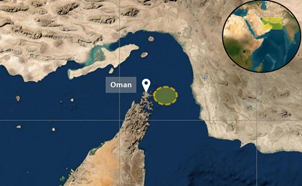
chief safety and security officer. “The central part of the Strait is mined and
un-navigable, and only the inshore traffic zones close to Oman and Iran are
reportedly free of mines.”
Larsen flagged the MOU itself as raising more
questions than it answers, citing gaps around safe routes, traffic separation,
sequencing of vessels departing the Gulf, and emergency response procedures.
BIMCO is calling for an international coordination body to be established to
manage the transit process and is encouraging owners to wait for its direction
rather than attempt passage independently. “To avoid serious risks associated
with an uncoordinated mass transit through the narrow inshore traffic zones, we
encourage shipowners to consider waiting for further clarification,” Larsen
said.
BIMCO’s chief shipping
analyst Niels Rasmussen offered cautious optimism on the commercial outlook.
More than 100 laden tankers and nearly 100 in ballast are currently trapped in
the Persian Gulf. “Within a couple of months, shipping services could return to
pre-war levels,” he said, while noting that cargo volume recovery may lag due
to infrastructure damage. Rasmussen specifically highlighted damage to gas
production at Ras Laffan in Qatar and the Habshan complex in the UAE as likely
to delay LNG shipment recovery and weigh on fertiliser exports. The World Shipping Council (WSC), liner
shipping’s lobby group, welcomed the agreement while emphasising that paperwork
alone is not enough. “The immediate priority is safe passage for the seafarers
and ships still stranded in the area,” said WSC president and CEO Joe Kramek.
“That will require coordination between states, the IMO and industry, backed by
the necessary safety and security guarantees.” Kramek added that the crisis had
reinforced a fundamental principle: “Ships must be able to pass through the
Strait of Hormuz safely, securely and without toll.” Braemar’s tanker analysts struck a sceptical note on the pace of traffic
recovery, arguing the deal will fail to restore flows to pre-closure levels
even under optimistic assumptions. Permanent diversion of Saudi crude via the
East-West pipeline to Yanbu, combined with the UAE’s accelerating push toward
zero Hormuz dependency, means the strait may have permanently shed around 4m
barrels per day of its pre-war crude throughput. A further complication is the
possibility that Iran may charge transit fees after 60 days.
Braemar estimates that
even in an optimistic scenario where Middle East crude exports rise by 8m
barrels per day over the coming months, the VLCC market may not see the rate
surge some are anticipating. The reactivation of idle tonnage — including some
54 VLCCs already waiting near the Gulf — will absorb a portion of the demand
recovery, while the loss of urgency premium that has kept rates elevated during
the closure could send freight levels back toward where they were before the
conflict began. A so-called “fear premium” for Gulf-loading routes, however, is
expected to persist for some months. The deeper risk, Braemar noted, is that the
60-day deadline on the thorniest unresolved issues — Iran’s nuclear programme,
proxy support and Hormuz administration — could become a rolling target,
maintaining a semi-permanent threat of reclosure. For shipowners weighing
whether to move, that uncertainty may prove harder to navigate than the mines.