
Office Address
123/A, Miranda City Likaoli Prikano, Dope
Phone Number
+0989 7876 9865 9
+(090) 8765 86543 85
Email Address
info@example.com
example.mail@hum.com


123/A, Miranda City Likaoli Prikano, Dope
+0989 7876 9865 9
+(090) 8765 86543 85
info@example.com
example.mail@hum.com

Sharma said that while Indian entrepreneurs possess strong
ambition and product capabilities, challenges related to market access, export
compliance, logistics knowledge, and financing continue to hinder their
integration into global value chains.
“Many entrepreneurs have excellent products but lack the knowledge
required to navigate exports successfully. Building awareness, improving export
readiness, and providing access to logistics expertise are essential for
helping businesses scale internationally,” Sharma said.
Sharma highlighted
the success of DP World’s “We Rise” programme, developed in partnership with
NITI Aayog’s Women Entrepreneurship Platform (WEP), which aims to help
women-led businesses access markets, finance, and cross-border trade
opportunities. The initiative attracted over 600 applications from across
India, with a significant number coming from Tier II and Tier III cities,
reflecting the growing entrepreneurial ecosystem beyond major metropolitan
centres. According to Sharma, many
participants entered the programme with strong business ideas but limited
understanding of export processes, international standards, supply chains, and
documentation requirements. “We have
seen entrepreneurs transition from operating at a small scale to becoming export-ready
within months. Some have accelerated their existing export journeys
significantly,” she said.
However, she noted that women entrepreneurs continue
to face social and structural barriers, often needing to secure family support
before pursuing business opportunities. Building confidence and creating
stronger support ecosystems remain crucial for enabling greater participation.
As India seeks to
expand its export footprint, Sharma emphasised the importance of integrated
logistics corridors, warehousing infrastructure, free trade zones, and
multimodal connectivity in supporting MSMEs.
“A well-developed trade ecosystem is essential for MSME growth. Large
enterprises already benefit from integrated logistics networks, but many
smaller businesses either lack access to these facilities or awareness of how
to utilise them effectively,” she said. DP World currently operates five
container terminals in India with a combined capacity of 6 million TEUs
annually, alongside three Free Trade Warehousing Zones (FTWZs), five container
freight stations, and a global logistics network spanning more than 80
countries. The company is also
developing alternative trade corridors aimed at improving India’s connectivity
with international markets.
Sharma said sustainability has evolved beyond a
compliance requirement and is increasingly becoming a driver of long-term
business value.
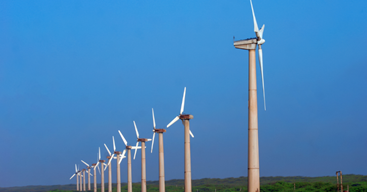
DP World has committed to achieving net-zero emissions
by 2050 and is pursuing decarbonisation through electrification, renewable
energy adoption, and energy-efficiency initiatives across its operations.
More than 60% of the company’s global operations are
powered by renewable energy, while over 60% of its rubber-tyred gantry cranes
(RTGs) have already been electrified.
In India, DP World’s Free Trade Zones at Nhava Sheva
and Chennai operate solar power installations of 1.5 MW and 1 MW respectively
and utilise fully electric material-handling vehicles.
The company has also introduced green power sourcing
at its terminals in Nhava Sheva, enabling approximately 75% of conventional
electricity consumption to be replaced with renewable energy and reducing
carbon emissions by nearly 50%.
Sharma noted that
shifting cargo from road transport to rail and coastal shipping presents
significant opportunities for reducing logistics emissions without necessarily
increasing costs. She cited a recent
multimodal logistics solution developed for Reliance Industries that replaced
around 700 kilometres of road transportation per container with a coastal rail
corridor connecting Jamnagar, Ahmedabad and Mundra. In another project involving a
global tyre manufacturer, DP World reduced supply chain carbon emissions by 53%
through cargo consolidation and the adoption of multimodal transportation
combining coastal shipping, rail, and limited road movement. “Sustainability should be viewed as a
long-term business investment rather than a cost. Many sustainability
initiatives improve operational efficiency and resilience while reducing
environmental impact,” Sharma said. DP World’s upcoming greenfield terminal at
Tuna Tekra in Gujarat is being developed in line with the Government of India’s
Green Ports (Harit Sagar) guidelines. According to Sharma, incorporating
sustainability measures from the planning stage enables ports to achieve higher
environmental performance and long-term resilience.
Looking ahead,
Sharma said India’s future trade ecosystem must prioritise inclusivity
alongside growth. “We need stronger support systems for women-led enterprises,
minority-led businesses, and other underrepresented groups. When governments,
industry players, and entrepreneurial networks work together, we can build a
more resilient, inclusive and globally competitive trade ecosystem for India,”
she said. She added that India’s export growth story will increasingly depend
on creating pathways that enable smaller businesses to access global
opportunities while leveraging modern logistics infrastructure and sustainable
supply chain solutions.