




Office Address
123/A, Miranda City Likaoli Prikano, Dope
Phone Number
+0989 7876 9865 9
+(090) 8765 86543 85
Email Address
info@example.com
example.mail@hum.com


123/A, Miranda City Likaoli Prikano, Dope
+0989 7876 9865 9
+(090) 8765 86543 85
info@example.com
example.mail@hum.com
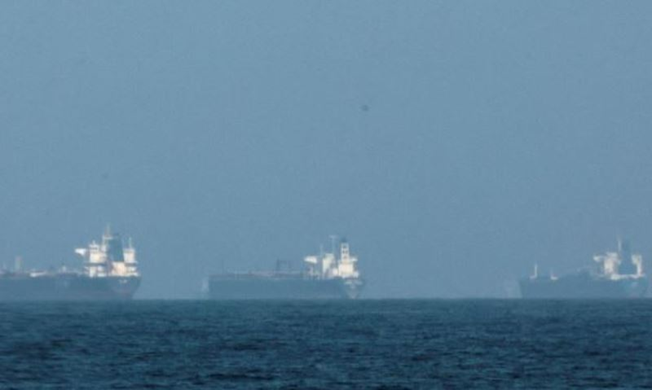
The reopening of the Strait of Hormuz, one of the world’s
most critical maritime chokepoints through which a substantial share of global
crude oil and liquefied natural gas (LNG) exports transit, is expected to
restore confidence across shipping markets after prolonged disruption.
Industry
sources estimate that nearly 600 vessels, including around 250 tankers, remain
in the Persian Gulf awaiting the full resumption of normal maritime traffic.
J. Krishnan,
Partner at Chennai-based S Natesa Iyer Logistics LLP, described the cessation
of hostilities and restoration of commercial shipping through the Strait as a
positive development for global trade.
“Lower
energy prices will reignite India’s growth and positively impact the common
man’s daily expenses. The market rebound also presents an opportunity that Indian
exporters should not miss,” he said.
Vivek Raja
of Pearl Shipping, Thoothukudi, noted that stability in the Gulf region is
vital for international commerce.
“Any disruption in the Strait of Hormuz pushes up oil prices,
increases bunker fuel costs and drives freight rates higher, ultimately
affecting the cost of goods worldwide,” Raja said. “The agreement offers hope
for smoother maritime operations, reduced logistical uncertainties and the
restoration of trade momentum.”
According to him, the development could also ease
supply chain pressures and support growth across India’s shipping and logistics
sectors.
Beyond immediate trade benefits, experts believe the
agreement carries broader geopolitical significance. Ajay
Srivastava, Founder of the Global Trade Research Initiative (GTRI), said India
stands to gain from greater stability in oil, LNG and LPG supplies, which would
help moderate inflation and support economic growth. “The agreement demonstrates that economic
and strategic leverage can influence negotiations. India must continue engaging
with major powers from a position of equality while protecting its national
interests,” Srivastava said.
Industry
observers estimate that global shipping networks could require two to three months
to return to pre-crisis operating conditions as vessel schedules, equipment
positioning and cargo flows gradually normalize.
Container
shipping analyst Lars Jensen said the agreement remains subject to
implementation over the next 60 days, with maritime traffic expected to resume
progressively rather than immediately.
Mine-clearing operations and security assessments will
likely be required before shipping lines fully restore normal services through
the Strait of Hormuz.
Container carriers may initially deploy additional
vessels to clear cargo backlogs accumulated during the disruption. Freight
rates, which surged during the crisis, are expected to soften as vessel
movements normalize and insurance costs decline.
The agreement has also revived industry discussions on
the eventual reopening of the Red Sea-Suez Canal route, a development that
could significantly reduce transit times between Asia and Europe while
releasing additional shipping capacity into global markets.
“The more interesting question for global container
shipping is when this would lead to a reopening of the Suez route through the
Red Sea,” Jensen observed.
Manufacturing firms with significant exposure to West
Asia have also welcomed the development.
Anil Kumar Puttan, Chairman and Managing Director of
Bengaluru-based Unimech Aerospace, said improved regional stability would
strengthen manufacturing, aerospace, energy and industrial infrastructure
projects across the Gulf region.
“Normalisation of trade routes and improved investment
confidence will support industrial growth. At the same time, localisation and
supply-chain strengthening initiatives will remain important for the region’s
long-term development,” he said.
Despite the optimism, the maritime industry remains
cautious about declaring a complete return to normalcy. According to reports by UK-based Lloyd’s
List Intelligence, the US-Iran agreement has provided a rare moment of relief
in a region where merchant seafarers have borne the brunt of heightened security
risks. However, shipping stakeholders are treating the announcement with
caution rather than celebration.
Until the agreement is formally signed and implemented, both the US
naval blockade measures and Iran’s transit permission requirements for vessels
in the Persian Gulf remain in force.
Lloyd’s List noted that war-risk
insurance markets are still assessing the implications of the political
developments, with underwriters yet to establish a clear benchmark for Strait
of Hormuz risk premiums.
For now,
shipping companies, insurers and cargo owners are expected to closely monitor
developments as the industry awaits concrete implementation of the agreement
and a sustained return to stability in one of the world’s most strategically
important maritime corridors.