




Office Address
123/A, Miranda City Likaoli Prikano, Dope
Phone Number
+0989 7876 9865 9
+(090) 8765 86543 85
Email Address
info@example.com
example.mail@hum.com


123/A, Miranda City Likaoli Prikano, Dope
+0989 7876 9865 9
+(090) 8765 86543 85
info@example.com
example.mail@hum.com
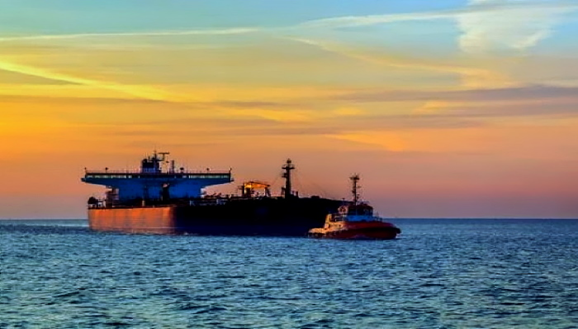
In its
latest weekly report, shipbroker Intermodal said that “as the war in Ukraine
extends into its fifth year, one of its most significant market consequences is
emerging not on the battlefield, but in Russia’s fuel system. Repeated attacks
on refinery infrastructure have deepened domestic shortages and reduced
Russia’s ability to process crude. Yet the result is not a broad decline in
Russian oil flows. It is a shift in composition: more crude being pushed into
seaborne exports, particularly through western ports, and fewer refined
products available for domestic use or export. Moscow’s request to Kazakhstan
for gasoline supplies underlines the pressure on Russia’s downstream system.
For shipping markets, that distinction matters more than the headline export
number, because crude and product tankers are exposed to opposite sides of the
disruption”. According to
Intermodal’s Senior Analyst, Mr. Nikos Tagoulis, “according to LSEG data,
Russia’s crude oil exports rose by 7.8% year on year in June, supported by stronger
shipments to India and a corresponding increase in ton-mile demand. On the
surface, this points to a firmer crude export programme, particularly from
western ports such as Primorsk, Ust-Luga and Novorossiysk. The underlying
driver, however, appears less constructive. Higher crude exports are being
supported not by a stronger Russian oil balance, but by reduced domestic
processing capacity”. “The pressure is increasingly visible inside Russia’s
domestic fuel market. By late June, at least 55 of Russia’s 83 federal entities
were reportedly facing some form of fuel restriction, meaning that more than
two-thirds of Russia’s administrative regions were experiencing constrained
access to gasoline and diesel. The disruption reflects the cumulative impact of
Ukrainian drone strikes on downstream infrastructure. Since March, more than
two dozen attacks have reportedly hit eight of Russia’s ten largest refineries,
taking around 20% of total refining capacity offline. The effect is also
visible in export flows: Russian fuel oil exports declined by 17% year on year
in Q2 2026, underlining the extent to which refinery outages are reducing
product availability both domestically and in the seaborne market”,
Intermodal’s analyst said. “The
implication is clear: refinery outages are altering the composition of Russian
oil flows. Crude that cannot be processed domestically must either be stored or
sold overseas. With Moscow seeking to maintain production levels and secure
export revenues, more of these barrels are being redirected into the seaborne
crude market, even as refined product availability weakens. This changing flow
pattern creates a clear divergence between crude and product tankers. For crude
carriers, the disruption is broadly supportive. Higher shipments from Russia’s
western ports are increasing liftings from the Baltic and Black Sea, providing
additional employment for Aframax and Suezmax vessels. Refinery damage can
therefore support crude tanker demand indirectly, not because Russia’s oil system
is healthier, but because more crude is being forced into export channels”, Mr.
Tagoulis said. He added that “product
tankers face the opposite dynamic. Lower output of diesel, gasoline and jet
fuel reduces the availability of clean cargoes from Russian ports, limiting
enquiries and weighing on product tanker demand. If fuel export restrictions
are extended or tightened, the negative impact on product tanker stems could
become more direct. The risk premium around Russian-linked trades is also elevated.
Ukrainian attacks have not been limited to refineries, but have also affected
port, storage and tanker-related infrastructure. This makes loading schedules
less reliable and adds insurance, compliance and security concerns. Some owners
may become less willing to call at western Russian ports, reducing the pool of
available tonnage and increasing fixing complexity”. Mr. Tagoulis concluded that “the key
takeaway is that elevated Russian crude exports should be interpreted with
caution, as they may reflect constraints within Russia’s refining system rather
than a stronger underlying oil balance. In this case, they point to a
constrained refining system that is pushing more crude into seaborne exports
while reducing Russia’s ability to supply refined products. For the wet
segment, this disruption-driven shift in flows is therefore supportive for
crude carriers and negative for product tankers, while also creating heightened
operational risk and uncertainty across both segments”.