




Office Address
123/A, Miranda City Likaoli Prikano, Dope
Phone Number
+0989 7876 9865 9
+(090) 8765 86543 85
Email Address
info@example.com
example.mail@hum.com


123/A, Miranda City Likaoli Prikano, Dope
+0989 7876 9865 9
+(090) 8765 86543 85
info@example.com
example.mail@hum.com
The 2026 edition of the
Xinhua-Baltic International Shipping Centre Development Index (ISCDI) — jointly
produced by the Baltic Exchange and China’s Xinhua News Agency — has confirmed
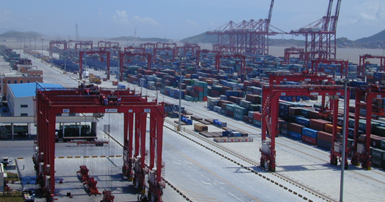
a milestone shift in the world’s port hierarchy: Shanghai has overtaken London
to become the world’s second-ranked international shipping centre, ending a
climb the Chinese port city has been making steadily since the index launched
in 2014, when it stood seventh.
Singapore retained its
position as the world’s top shipping centre for the thirteenth consecutive
year, scoring 99.32 out of a possible 100 — a commanding lead reflecting its
combination of port throughput, connectivity, professional maritime services
(insurance, law, finance, arbitration) and a business environment that continues
to draw carriers, traders and shipowners to base regional operations
there. Shanghai’s score of 84.27
edged out London’s 81.80, pushing the British capital — long considered the
historic seat of global shipping’s professional services and legal infrastructure
— down to third place. Hong Kong placed fourth with 80.87, and Dubai rounded
out the top five with 77.13. The index methodology weighs a mix of hard port
infrastructure metrics — cargo throughput, container volumes, connectivity —
against softer indicators of maritime business ecosystems, including the depth
of shipbroking, insurance, finance, arbitration and classification services
clustered in each centre. The result reflects two parallel,
long-running trends. On one side, Shanghai’s ascent has tracked China’s
dominance of global container trade and its deliberate build-out of the port
and its supporting professional-services ecosystem, positioning the city as a
genuine rival to Singapore for the title of the world’s premier shipping hub. On
the other, London’s relative slide reflects a longer-term question that has
dogged the City’s maritime services cluster since Brexit: whether its historic
strength in ship broking, marine insurance and maritime law can hold its ground
as trade volumes and, increasingly, capital, shift towards Asia. For India, the rankings are a reminder of
how far its own ports still have to travel to be considered global shipping
centres in the full sense the index measures — not merely cargo throughput, but
the surrounding ecosystem of maritime finance, insurance, law, and ship
management. None of India’s ports feature among the leading names in the
ISCDI’s upper tiers, even as individual facilities such as Mundra, Jawaharlal
Nehru Port and the upcoming Vizhinjam International Seaport post strong
throughput growth. The gap underscores why India’s parallel push on
shipbuilding finance, coastal shipping reform, and the recent renaming of the
Directorate General of Shipping to the Directorate General of Maritime Administration
are being framed by officials not just as regulatory tidying, but as steps
toward building the broader ecosystem — insurance, arbitration, classification,
finance — that separates a large port from a genuine global shipping centre.
The
next ISCDI report is expected in 2027; analysts will be watching whether
Shanghai can close the gap further on Singapore, and whether London’s slide
continues or stabilises.