Saturday 18 07 2026 01:47:32 AM

Office Address

123/A, Miranda City Likaoli Prikano, Dope

Phone Number

+0989 7876 9865 9

+(090) 8765 86543 85

Email Address

info@example.com

example.mail@hum.com

Without these materials, everything would grind to a halt’
They are in phones, power sockets, your watch battery and the screen you are looking at right now. Without us even realising it, critical materials underpin almost everything we use. Yet we rarely stop to think about them. Eva Verschoor believes that needs to change
Dr.G.R.Balakrishnan Jul 17 2026 Indian Ports News

Without these materials, everything would grind to a halt’

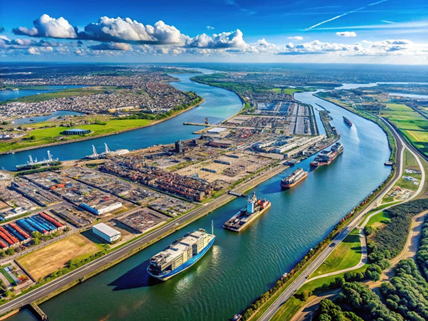
As Program Director Critical Minerals at the Port of Rotterdam Authority, she works on the invisible layer of our economy. ‘They are in almost everything,’ she says. ‘From batteries to windmills, and from computer chips to your electric bike.’ Critical materials are nothing new. They have been used for years and have been entering through the port for decades. What is new, however, is the context. Many of these materials come from countries that have invested across the entire supply chain in recent decades, from mining and refining to processing, as China has done. So that means that if those countries see reason to do so, they can restrict Europe’s access to these crucial materials. ‘Suddenly it’s about medical equipment or the energy transition that could grind to a halt.’ The COVID-19 pandemic brought that into sharp focus, and with increasing geopolitical tensions, supply lines are increasingly vulnerable to disruption. This has only reinforced the urgency of Eva’s work: strengthening security of supply.
Strengthening supply chains.   Together with her team, she is developing a strategy to strengthen the resilience of European raw material supply chains and position Rotterdam as a leading hub for critical materials in Europe. ‘To improve security of supply, there are various actions you can take at critical points in the chain. For example, by becoming involved earlier in the chain through refining and processing, by working with logistics partners in the middle of the chain on things like strategic stockpiling, and by organising value-adding facilities closer to home.’ She looks at international collaboration, but also processing, trade and logistics: ‘If you are at the end of the supply chain, you have less control. So we’re moving further along in the chain. That puts us in a stronger position.’ But a resilient supply chain also requires attention to the later stages of the chain: retaining, reusing, recycling and recovering materials actually gives Europe and Rotterdam additional strategic strength.‘If you are at the end of the supply chain, you have less control. So we’re moving further along in the chain. That puts us in a stronger position.’She looks beyond Rotterdam itself. Her work operates across multiple levels, and that is precisely what makes it complex. And interesting. Internationally, she builds relationships with countries where raw materials originate, with a focus on fair and sustainable collaboration. At European level, she works on strategic autonomy and coordination with Brussels. Nationally, she aligns her work with policies and priorities. And regionally, she looks at the specific possibilities in and around Rotterdam. She moves seamlessly between these different spheres: ‘You can’t do this work from a single perspective. You have to understand what’s happening across the entire chain, at every level. And that’s only possible if you go out and talk to people.’