US disables vessels in renewed blockade as 26th Iran tanker reaches Asia
Even as US forces disabled a second
tanker for breaking its renewed blockade of Iran ports the last of some 26
laden Iranian tankers that sailed from the country’s waters after the first
embargo was lifted on 18 June was transiting the Singapore Strait heading towards
the Malaysian EOPL. The US renewed its
blockade of Iranian ports on 14 July after a 60-day Memorandum of Understanding
(MoU) with Iran collapsed after less than a month. On 24 July US Central Command (Centcom)
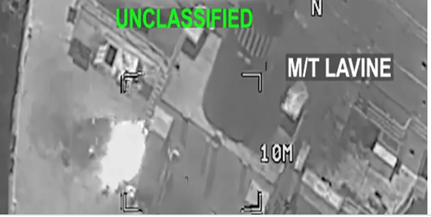
said its forces disabled Mozambique-flagged tanker Lavine in
the Gulf of Oman the second such operation such the blockade was reimposed. In
addition to disabling two vessels said it had redirected 12 vessels and boarded
two others to verify compliance since the blockade was reinstated.
Meanwhile on 25 July Charlie Brown, Senior Advisor to United Against a
Nuclear Iran (UANI), who tracks Iranian tankers, said that Iranian-flagged
tanker Humanity had transited the Singapore Strait eastbound
to the Malaysian EOPL. According to Brown the Humanity was the
26th and final Iran-flagged tanker to depart Iran after the
lifting of the initial blockade.
The first blockade of Iranian ports from
13 April – 18 June had effectively drawn down the inventory of Iranian crude
that had carried out transfers at the EOPL before cargoes mainly head to teapot
refineries in China, and Iran
acted quickly when it had the opportunity to resume exports when the MoU
between the US and Iran was signed.
“The Iranians took full advantage of the
MoU to build up inventory to where it was before the first blockade,” Brown
told Seatrade Maritime News. The 26 tankers that departed Iran
for Asia while blockade was lifted were carrying around 45 million barrels of crude worth
an estimated $4 billion to its embattled economy.
Iranian tankers do not ship their cargoes
direct to the final destination, normally teapot refineries in China, rather
the oil is transhipped in STS operations in the Malaysian EOPL. The operation
of the EOPL in Malaysia’s EEZ but outside territorial waters is opaque with
vessels turning off AIS transponders and often crudely disguising names with
tarpaulins. It is unclear if the transfer operations are authorised by
Malaysia.
In total as of 24 July UANI’s Brown had
detected 261 vessels at anchor in the Malaysian EOPL via satellite imagery, but
some 120 or 46% did not correlate to AIS signals indicating dark fleet
activity. With inventories of
Iranian crude for export replenished it will take time for the renewed US
blockade of Iran ports to have full economic impact. With the initial blockade
having last just over two months Brown believes another month would have caused
“real pain” to Iran.

Related News