


Gujarat Weighs Concession Extensions for Major Private Ports
The terms of any extension,
including its duration, have not yet been made public. The proposed rollover is
being closely watched by port investors as Gujarat was among the first states
to promote private participation in port development in the late 1990s. The
outcome could also set a precedent for concession renewals in other
states. The 30-year concession for APM
Terminals-managed Pipavav Port is due to expire in September 2028, while the
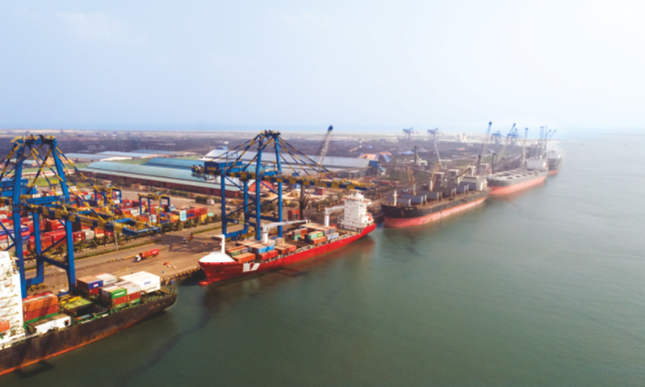
concession for Adani Ports and Special Economic Zone Ltd (APSEZ)-owned Mundra
Port ends in February 2031. The concessions for Hazira Port, operated by Shell
Gas BV, and Dahej Port, developed by Petronet LNG Ltd, are due to expire in
April and December 2035, respectively.
APSEZ also operates non-LNG cargo facilities at Hazira and Dahej through
sub-concessions with Shell and Petronet LNG.
The original concessions awarded by the Gujarat government for
greenfield ports were for 30 years, without provisions for automatic
extensions. This has made the renewal process more complex, particularly in
allowing existing operators to continue operating facilities that have
attracted substantial private investment without inviting criticism over
extending concessions without a fresh tender.
Sources familiar with the
matter said the proposed extensions could be linked to investment commitments
by existing operators. The extension, they said, would not be automatic and
would depend on the scale of investments proposed for the respective
ports.However, Gujarat Maritime Board (GMB) Vice Chairman and CEO Dr Ajay Kumar
said no decision had yet been taken on concession extensions. Hareet Shukla,
Principal Secretary, Ports & Transport Department, Gujarat government, also
said there was still time to take a decision, given that the concessions have
several years remaining. Shukla said the state would first finalise a policy
before determining the structure for extending the concessions. He added that
discussions were already taking place in the background and there would be no
delay in taking a decision. The
Gujarat Maritime Board is understood to have discussed the matter at a board
meeting on August 17. According to sources, the board is considering providing
a letter of comfort to existing port operators indicating that the extension
process would be taken forward. Greater clarity on the concession framework
could unlock significant investment plans that have been held back because of
uncertainty over the remaining concession period. At Mundra, APSEZ has received
environmental and coastal regulation zone clearances to more than double the
port’s capacity to 514 million tonnes (MT), from the existing 225 MT. The
proposed expansion involves an investment of around ₹45,000 crore and forms
part of a Waterfront Development Plan covering 3,335 hectares. The expanded facilities are expected to
cater to multipurpose, liquid, gas and cryogenic cargo. Mundra currently has
approval to handle 225 MT of cargo annually, including 9.5 million TEUs of
containerised cargo. Mundra handled around 200 MT of cargo in FY26, accounting for more than
a quarter of India’s total port cargo volumes and over a third of container traffic.
With the port recording double-digit growth in recent years, APSEZ has been
pursuing capacity expansion to accommodate future demand. Similarly, APM Terminals’ Pipavav Port has
secured environmental and coastal regulation zone clearance for an investment
of around $2 billion to expand and upgrade the facility. The planned
investment, however, has been affected by uncertainty over the remaining
concession period, which is less than two years away. GMB-run and private ports in Gujarat
currently play a significant role in India’s maritime sector. Dr Kumar said
ports under the GMB account for around 30% of the cargo handled by Indian ports
despite representing about 20% of the country’s total port handling capacity. GMB is now planning further expansion
through brownfield projects, new captive jetties, expansion of GMB-owned ports
and the development of new greenfield sites. The
expansion plans are aligned with India’s long-term maritime ambitions under the
Viksit Bharat vision, which envisages total port handling capacity of 10,000 MT
by 2047. Gujarat aims to retain at least a 30% share of that capacity,
translating into around 3,000 MT by 2047.
Related News