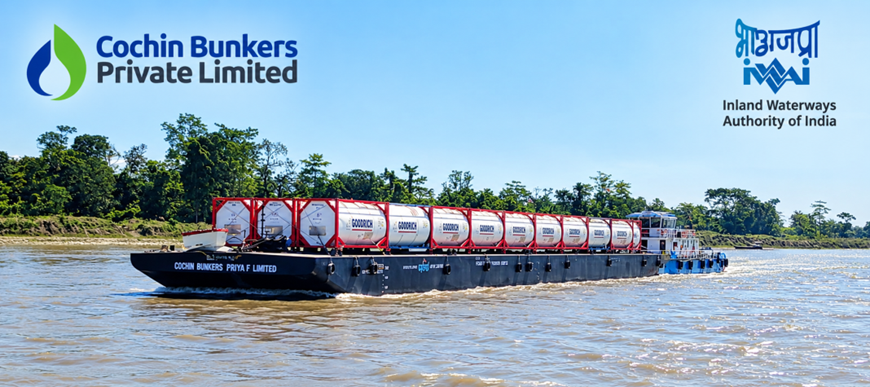
IWAI Facilitates Methanol Movement from Guwahati to Bogibeel, Opening New Inland Waterway Cargo Opportunity
Cochin Bunkers Private Limited is executing the movement under a five-year contract with Assam Petrochemicals
Limited (APL) for the project. The current movement is part of
the trial phase of a
solution developed by Cochin Bunkers for the safe, efficient
transportation of methanol and other hazardous cargo through the Brahmaputra
inland waterway system.
According to Cochin
Bunkers, the company has spent the last
year developing and putting in place the operational structure required
for the project, including a logistics solution designed specifically for
effective transportation of the cargo over the Brahmaputra. APL is set to move the methanol consignment
onward to Bangladesh, marking an
important step in expanding the inland waterway cargo basket in the Northeast
and strengthening waterway-based trade connectivity with the neighbouring
country. Cochin Bunkers said its
experience in handling hazardous cargo on inland waterways forms a key part of
the project. The company currently transports more than half a million tonnes of hazardous cargo annually through
inland waterways and has, over the past several years, handled millions of tonnes of hazardous materials
through waterway-based logistics. The
movement demonstrates the growing potential of National Waterway-2 for transporting diverse and specialised
cargo, including hazardous materials, while supporting cost-efficient and
multimodal logistics across the Northeast and facilitating greater regional
trade connectivity.
The five-year
engagement between Cochin Bunkers and APL is expected to provide a structured
framework for expanding such cargo movements and developing a more robust
inland waterway logistics chain on the Brahmaputra.
Related News