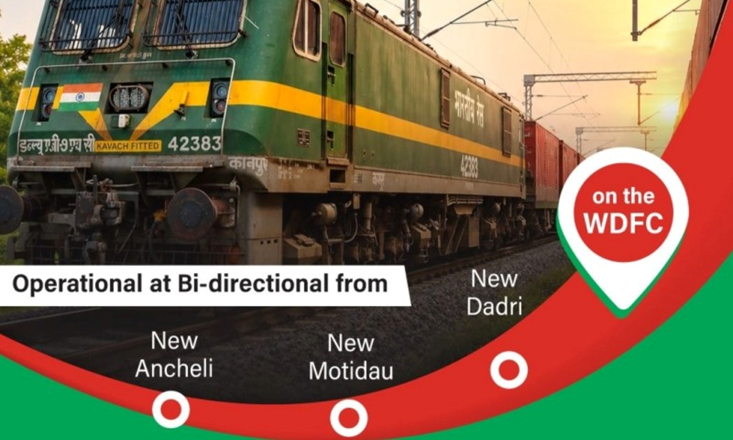
JPP–RCS Service Expands Dedicated Parcel and Rapid Cargo Movement on WDFC
The service is
aimed at providing faster and more efficient connectivity for smaller and
time-critical consignments by leveraging the infrastructure and operating
advantages of the Dedicated Freight Corridor network. Unlike conventional
freight movements that are largely designed around bulk commodities and larger
consignments, the JPP–RCS initiative provides a focused mechanism for moving
parcelised cargo through the rail network.
With services operating in both directions, consignments can be moved
between key locations on the WDFC network with improved connectivity and
greater flexibility for shippers, logistics operators, e-commerce businesses
and other cargo aggregators. The New
Dadri–New Ancheli/New Motidau corridor connects important northern and western
freight markets, offering access to industrial, commercial and consumption
centres along the WDFC. The availability of a dedicated service for parcels and
rapid cargo could support the movement of high-value, low-volume and
time-sensitive shipments while providing an alternative to road-based
transportation. The initiative is
particularly relevant as India’s logistics sector experiences growing demand
for faster delivery of e-commerce orders, parcels, express cargo and other
time-sensitive consignments. Rail-based parcel services can help integrate such
cargo into the country’s expanding multimodal logistics network and potentially
improve long-distance freight efficiency.
The WDFC has been developed to enhance freight transportation capacity,
improve transit efficiency and facilitate faster movement of goods between the
northern and western regions. The introduction of JPP–RCS adds another cargo
segment to the corridor’s operational portfolio, extending the utility of
dedicated freight infrastructure beyond traditional bulk freight. For logistics service providers and cargo
owners, the service also creates opportunities to integrate rail with first-
and last-mile road connectivity, enabling a multimodal transportation model in
which cargo can be consolidated, moved rapidly by rail over the long-haul leg
and delivered to its final destination through local distribution
networks. The bi-directional operation
from New Ancheli, New Motidau and New Dadri therefore represents a step towards
developing a more diversified freight ecosystem on the WDFC, with the potential
to serve emerging requirements in parcel logistics, e-commerce and
time-sensitive cargo movement. As
India’s freight sector increasingly focuses on speed, reliability, connectivity
and lower logistics costs, dedicated rail solutions such as JPP–RCS could
become an important component of the country’s multimodal logistics
architecture.
Related News