Anglo-Eastern Supports World’s First Ammonia-Powered Dry Bulk Vessel from Concept to Operation
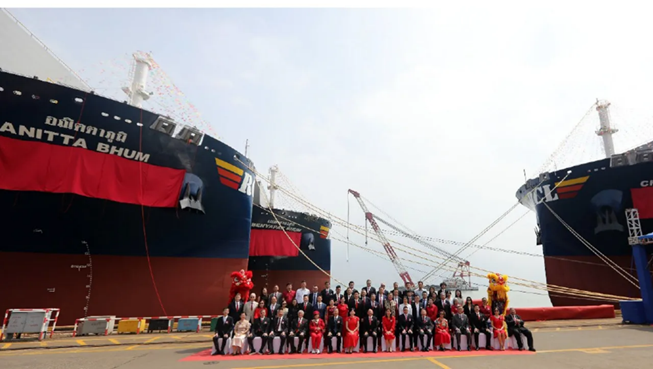
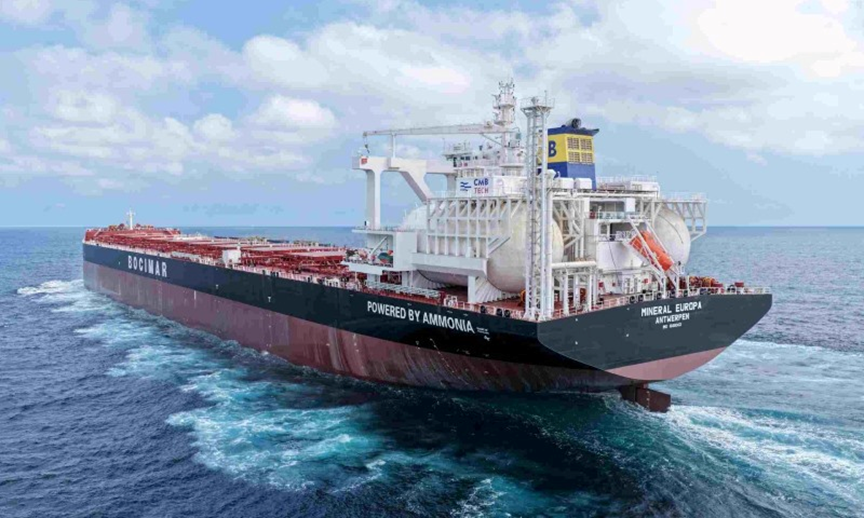
The 210,000-dwt Newcastlemax
vessel, built by CSSC Qingdao Beihai Shipbuilding Co., Ltd., is equipped with a
WinGD dual-fuel ammonia engine and a Sun Rui Ammonia Fuel Supply System,
enabling it to operate on ammonia or conventional marine fuel. Anglo-Eastern’s involvement began in 2018
with feasibility studies into alternative fuels for bulk carriers. Through
Anglo-Eastern Technical Services (AETS), the company subsequently developed the
vessel’s design philosophy, safety concepts, risk-mitigation measures and
preliminary engineering, securing Approvals in Principle from Lloyd’s Register
and the American Bureau of Shipping in 2021.
The project integrated fuel storage, double-wall piping, gas detection,
ventilation, containment and emergency systems, with a focus on crew safety and
commercial viability without compromising cargo capacity. Anglo-Eastern also supported operational
readiness through vessel-specific procedures for bunkering, maintenance and
emergencies, alongside specialised training using digital-twin technology and
ammonia fuel-system simulators. Senior officers participated in shipyard
activities and sea trials to familiarise themselves with the vessel’s
systems. Anglo-Eastern CEO Bjorn
Hojgaard said the project demonstrated how an owner’s commitment, backed by
engineering and operational expertise, could turn an emerging fuel technology
into a vessel ready for commercial operation.
CMB.TECH CEO Alexander Saverys described Mineral Europa as a major
milestone in the company’s decarbonisation journey, emphasising that
ammonia-powered shipping was moving from ambition to practical
implementation.
Anglo-Eastern said
it remains fuel-agnostic, helping shipowners assess alternative propulsion
technologies according to fleet requirements, trading patterns and risk
profiles. The Mineral Europa project highlights the growing role of integrated
technical management, safety planning and crew preparation in advancing
shipping’s decarbonisation.
Related News