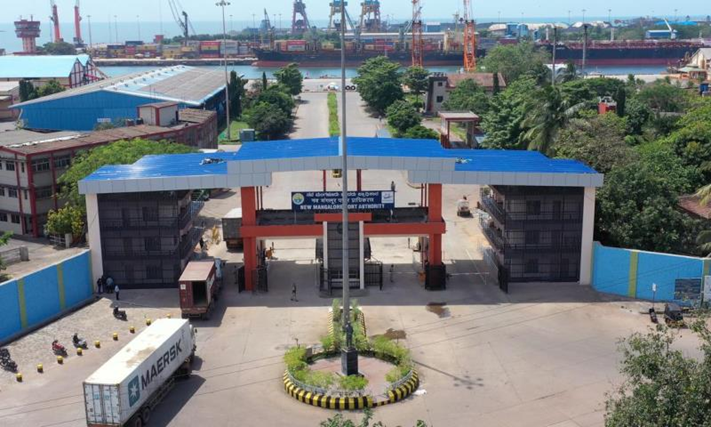
Deendayal Port Plans Emergency Capacity Measures Amid 70-Vessel Queue; ₹47,000-Crore Expansion Proposed
The congestion has
intensified amid a surge in break-bulk cargo, particularly basmati and
non-basmati rice exports to the Middle East, and growing demand for the port’s
cost-effective cargo-handling services. The delays are imposing substantial
costs on shipowners and charterers, who reportedly pay $15,000–20,000 per day
in vessel hire. DPA Chairman Sushil
Kumar Singh said the port was operating at 85–90% capacity utilisation, with
all berths occupied and vessels being handled at both berths and mooring
points. The port has handled more than 102 million tonnes (MT) of cargo in the
current financial year so far, compared with 78 MT during the corresponding
period last year, and is targeting 190–195 MT for the full year. In FY2025–26, DPA handled 160.11 MT of
cargo. To address the immediate
bottleneck, DPA plans to adapt one of its liquid cargo jetties to accommodate
rice-laden trucks and facilitate the loading of bagged rice onto ships. The
authority is considering modifications to the jetty’s frames and structures to
enable truck movement and cargo operations.
The port is also utilising three mooring points within the channel to
handle rice shipments. Under this arrangement, rice is transported by barges to
vessels stationed at the mooring points, allowing loading operations to continue
outside conventional berths. According
to Singh, a key contributor to the congestion is the shift by rice exporters
from containerised shipments to break-bulk cargo. Higher container freight
rates to the Middle East have encouraged exporters to move rice in bags aboard
conventional vessels, increasing demand for labour-intensive cargo-handling
facilities at Kandla. Bagged cargo
typically achieves productivity of only 3,000–3,500 tonnes per day, compared
with 40,000–50,000 tonnes for bulk cargo. Consequently, vessels carrying bagged
cargo can occupy berths for more than 10 days, reducing berth availability for
other ships. Although Mundra, operated
by Adani Ports and Special Economic Zone Ltd, is located nearby, shipping
industry sources indicate that vessels continue to prefer Kandla because of its
competitive tariffs. DPA is also
capitalising on the protected waters of the Gulf of Kutch to facilitate
ship-to-ship (STS) crude oil transshipment at Vadinar and nearby anchorage
areas. The port authority handled more
than 25 MT of crude oil through STS operations during the first half of the
current financial year, involving vessels navigating the Strait of Hormuz amid
continuing geopolitical tensions in the Middle East. DPA is providing Yokohama fenders, mooring
personnel and coordination support to facilitate transfers between large mother
vessels and smaller daughter vessels. The initiative is helping accommodate
crude oil movements involving a wider range of international origins and destinations. The expansion of STS operations is
providing an additional source of cargo volumes at a time when some of the
port’s traditional fast-moving cargo has declined following European Union
sanctions affecting Nayara Energy, which operates a refinery at Vadinar. Looking beyond immediate operational
measures, DPA has proposed a major expansion project involving a six-kilometre
waterfront outside Kandla Creek, with an estimated overall investment of
₹47,000 crore. The project is
envisaged in four phases of 1.5 km each. The first phase, estimated to cost
around ₹6,400 crore, is proposed to be developed through the engineering,
procurement and construction (EPC) model, with the proposal already submitted
to the Union Ministry of Ports, Shipping and Waterways. The first phase will involve constructing a
trestle and berth to handle bulk and break-bulk cargo. DPA intends to operate
the facility and use the resulting revenues to support further infrastructure
development, while considering public-private partnership (PPP) models for the
subsequent phases. The decision to
adopt the EPC route for the initial phase is linked to exclusivity clauses
governing private terminals at Tuna Tekra. Under agreements with the Adani bulk
terminal and DP World’s container terminal, DPA has undertaken not to establish
competing facilities for five years from the commencement of operations or
until the terminals achieve 70% capacity utilisation for two consecutive years,
whichever occurs earlier. The
authority believes that relocating certain operations from ageing berths inside
Kandla Creek to the proposed waterfront, rather than creating competing
capacity, could help avoid disputes over these contractual provisions. The proposed expansion also reflects
growing concerns over the structural condition of DPA’s older cargo-handling
infrastructure. Several berths inside Kandla Creek are more than 50 years old,
and incidents involving the collapse of berth No. 6 and damage to berth No. 18
have intensified calls for reconstruction.
DPA operates 16 dry cargo berths, including a container-handling
facility, and eight liquid cargo jetties, with three additional jetties under
development inside Kandla Creek.
Outside the creek, Tuna Tekra is emerging as a major centre for capacity
addition. Adani Ports operates a dry-bulk terminal there, while DP World is
developing a container terminal with a capacity of 2.19 million TEUs, expected
to open next year. Essar Ports is also expected to receive a 30-year contract
to develop and operate an 18.3 MT multipurpose cargo berth. However, DPA is proceeding cautiously with
the modernisation of existing berths to avoid potential litigation arising from
exclusivity arrangements with private terminal operators. Despite sustained vessel queues and visible
demand for additional capacity, DPA has encountered limited interest from
private operators in its PPP projects. Singh acknowledged the need for urgent
capacity creation and indicated that the authority may have to rely on its own
investments where private participation falls short. DPA has retained its existing tariff
structure, which is indexed to the Wholesale Price Index, while offering
concessions on selected vessel-related and crane-handling charges to attract
cargo. Competitive pricing remains a key factor in the port’s ability to retain
exporters and shipping lines despite prolonged vessel waiting times. With cargo volumes rising sharply, rice
exports shifting towards break-bulk shipments and crude oil transshipment gaining
momentum at Vadinar, DPA faces the dual challenge of managing immediate
congestion and expanding long-term capacity.
The proposed
waterfront development, combined with emergency berth utilisation measures and
greater use of mooring points, is expected to play a crucial role in
strengthening Kandla’s position as a major gateway for India’s international
trade.
Related News