India and Egypt explore trade pact and Suez Canal industrial zone
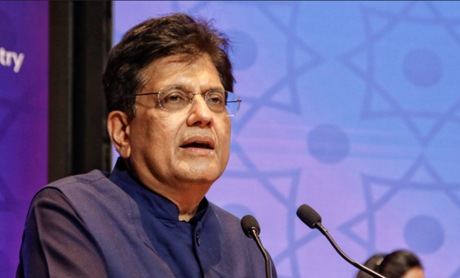
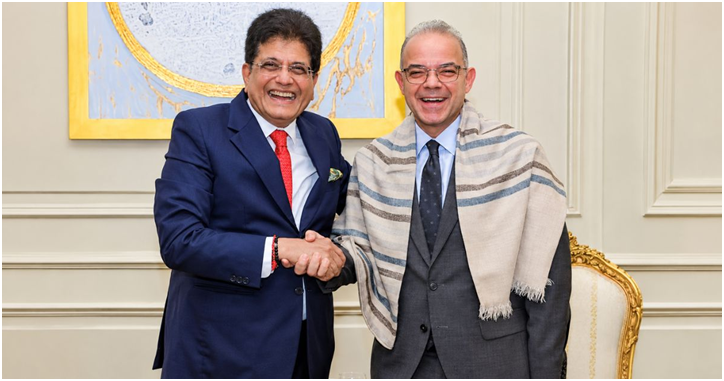
Goyal and Egypt’s Minister of
Investment and Foreign Trade, Mohamed Farid Saleh, co-chaired the seventh
India–Egypt Joint Trade Committee meeting in Egypt’s New Administrative
Capital. It was the committee’s first meeting at ministerial level. The working
group will explore terms of reference for either type of agreement, with the
aim of improving market access and encouraging investment. The ministers discussed ways to simplify
customs procedures, address non-tariff barriers and improve how products are
registered and assessed against standards. Priority sectors included
pharmaceuticals and medical devices, engineering and electrical equipment,
fertilisers, textiles and renewable energy. The two sides also discussed a
digital platform through which Invest India and Egypt’s General Authority for
Investment and Free Zones could share investment information and connect
businesses. India’s Ministry of
Commerce and Industry reported that bilateral trade rose 35% to about US$6.5
billion in the 2025–26 financial year. In April–September 2026, trade reached
US$5.04 billion, up from US$3.08 billion a year earlier. Indian investment in
Egypt already exceeds US$5.5 billion, according to the ministry. India’s main exports to Egypt include meat
and poultry products, petroleum products, organic chemicals, cotton and
machinery. Its principal imports from Egypt include crude petroleum,
fertilisers, cotton and mineral products. More than 300 companies took part in
the India–Egypt Business Forum, where discussions covered joint manufacturing
and investment in sectors including chemicals, automotive components, food
processing and logistics. Egyptian
Prime Minister Mostafa Madbouly welcomed the proposal for an Indian industrial
zone during his meeting with Goyal on 16 November. Saleh said Egypt would present
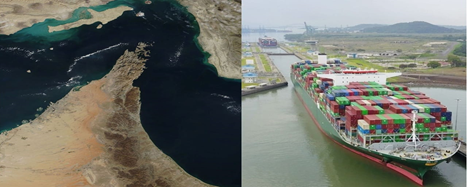
available plots for assessment. The economic zone comprises four industrial
zones and six ports, including Sokhna near the canal’s southern approach and
East Port Said at its Mediterranean entrance. The port links give manufacturers
in the zone access to shipping routes serving African, Middle Eastern and
European markets.
Goyal also met Egyptian
Transport Minister Kamel Al-Wazir to discuss cooperation in ports, railways,
highways and multimodal freight. In talks with Madbouly, Goyal identified port
development along the Suez Canal, shipbuilding and railway development as areas
where Indian and Egyptian companies could work together.
Related News