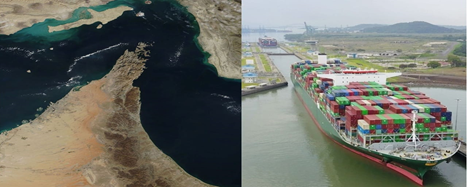
The perfect storm brewing before winter
The first failure is war. Since February
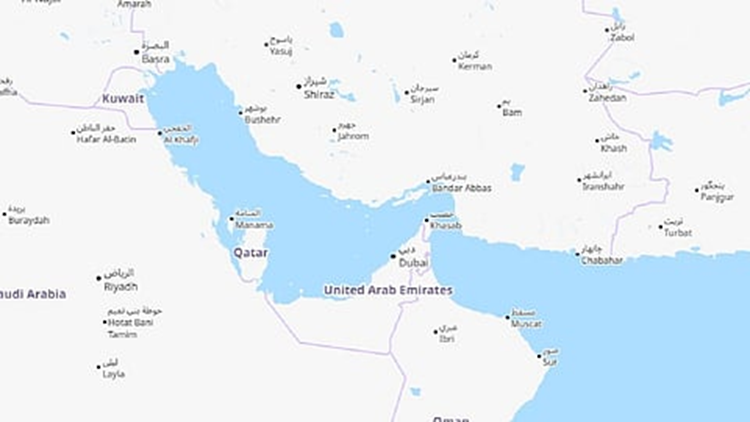
2026, the Strait of Hormuz — normally responsible for roughly a quarter of the
world's seaborne oil trade — has been under sustained disruption from the US-Israel-Iran
conflict. A ceasefire in April and a
follow-up agreement in June both collapsed when fighting resumed in July. Then,
on September 10-11, drone strikes launched from Iraq hit Saudi
Arabia's East-West Pipeline, the kingdom's main
workaround for moving oil to the Red Sea without going through Hormuz. Saudi
Aramco shut the pipeline down as a precaution, oil broke above $100 a barrel
for the first time in months, and the International Energy Agency reported
Saudi crude output at its lowest level in more than three decades. Houthi
forces have separately seized an island in the middle of the Bab el-Mandeb
Strait, threatening a second energy chokepoint. The second failure is climate. The Panama
Canal is entering its dry season already
strained: watershed rainfall from May through August ran a third below average,
forcing transit cuts from 36 vessels a day toward 32. The real test comes in
the December-to-April dry season — squarely inside the northern winter — when
roughly 3.2 million barrels a day of oil products that normally move through
the canal will be competing for a shrinking number of transit slots. One crisis is geopolitical, the other is
meteorological. Both are converging on the same few months. This matters enormously because of where
people actually live. Roughly 90% of the world's population is in the Northern
Hemisphere, along with the large majority of global economic output. That
population is heading into winter just as these two chokepoints degrade — while
the Southern Hemisphere, home to a much smaller share of humanity, is moving
into summer and largely insulated from the same seasonal exposure. The demand math makes this worse, not
better. Summer cooling is price-elastic — people can turn the air conditioning
down or skip a trip when prices rise. Winter heating is not; it is a
round-the-clock necessity that doesn't respond to price signals the way
discretionary spending does. And the Northern Hemisphere's exposed population
is, on average, considerably wealthier than the Southern Hemisphere's, which
means demand can be bid higher before it breaks — a condition that lets a
supply shock turn into a sustained price rise rather than a self-correcting
one. Forecasters have also flagged a chance that this winter's El Niño pattern
could bring unusually severe cold to parts of the north, adding further upward
pressure. The world is absorbing this
shock with less reserve capacity than it has had in decades. The US Strategic
Petroleum Reserve fell to its lowest level since 1983 — around 320-357 million
barrels against an authorized capacity of 714 million — after releasing and
loaning out 172 million barrels to help stabilize prices earlier in the
conflict. Most other countries' reserves are following a slower, more
discretionary refill path pushed into 2027. Layer onto that a packed holiday
travel season — Thanksgiving, Diwali, Christmas, New Year's and Chinese New
Year all fall within roughly the same October-to-January window — and aviation
and road fuel demand spikes at precisely the moment heating demand also peaks. The same disruption rippling through oil
markets is also hitting fertilizer supply chains, with consequences for the
opposite hemisphere's growing season. Gulf countries supply a meaningful share
of the world's nitrogen and phosphate fertilizers, and shipping through Hormuz
has fallen sharply. Brazil, which imports most of its fertilizer, has activated
an emergency committee to secure supplies ahead of its 2026/27 crop season,
with reports that less than half the fertilizer needed had been purchased as of
mid-2026. Argentina, Uruguay and Australia face similar exposure heading into
their own sowing windows — meaning a shortfall now could show up as higher food
prices in 2027. A best case sees both
chokepoints ease and reserves rebuild on schedule. A worst case sees the
pipeline stay offline, Panama's drought deepen, and fertilizer shortages cut
into Southern Hemisphere harvests — compounding energy and food inflation
together. The most likely outcome sits in between: persistent price pressure
punctuated by sharp spikes.
Beneath all of this, the crisis is
accelerating a longer-term realignment: BRICS has expanded to include several
major oil producers, adding momentum to efforts to move energy trade away from
the US dollar. For shipping and trade-exposed companies, the message is the
same regardless of which scenario unfolds — diversify routes and suppliers,
secure charter and fuel relationships now, and build flexibility into vessel
deployment before winter forces the decision.

Related News