Egypt advances plans for Indian industrial zone along Suez Canal
Egyptian Investment and
Foreign Trade Minister Mohamed Farid Saleh identified renewable energy, green
hydrogen, energy storage, pharmaceuticals and data centres as investment
priorities. The initiative aims to expand local production and bring Indian
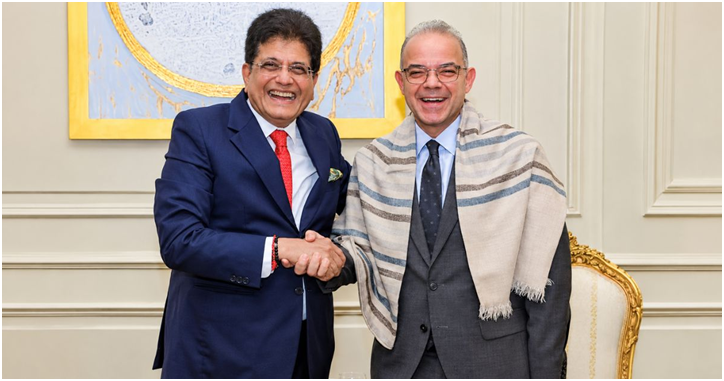
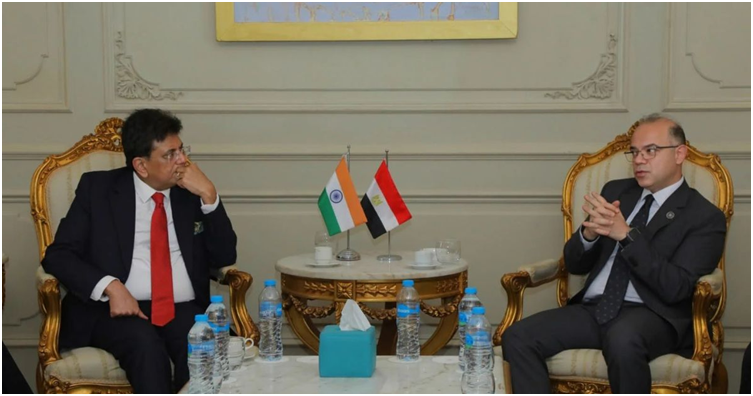
industrial expertise into Egypt’s manufacturing economy. Prime Minister Mostafa Madbouly welcomed
the proposal during his meeting with Goyal on 16 November at the Cabinet
headquarters in Egypt’s New Capital. He offered government support for Indian
companies establishing new projects or expanding existing investments. Farid said available land parcels would be
presented through ministerial-level Joint Trade Committee discussions to assess
their suitability. The official account did not specify a selected site,
development cost, construction schedule or operational start date. The
initiative therefore remains a proposal under discussion. The concept has been under consideration
for several years. In their January 2023 joint statement, India and Egypt
recorded Egypt’s willingness to consider allocating a dedicated area for Indian
industries within SCZONE, with India potentially arranging the master plan. The
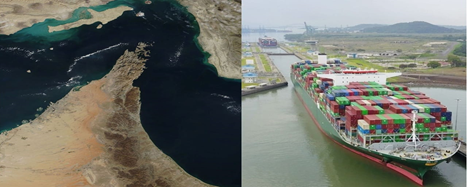
latest discussions build on that earlier commitment. SCZONE combines four industrial zones with
six seaports along the maritime corridor connecting the Mediterranean and Red Seas.
Its structure links manufacturing locations with port infrastructure serving
trade between Asia, Europe and surrounding markets. The authority identifies logistics,
pharmaceuticals, automotive manufacturing, petrochemicals, solar photovoltaic
equipment, data centres and bunkering services among its target activities.
These sectors overlap with several areas being explored by Indian and Egyptian
officials. During the visit, Goyal
also identified ports along the Suez Canal, shipbuilding, railways and
infrastructure partnerships as potential areas of cooperation. Both sides
discussed sector-specific working groups and reciprocal business missions to
translate investment interest into projects.
Separate discussions between Goyal and Egyptian Industry Minister Khaled
Hashem on 16 November focused on automotive manufacturing, renewable energy,
petrochemicals and advanced technologies.
Hashem highlighted electric vehicles and component manufacturing as
promising areas for collaboration. He encouraged partnerships between Egyptian
and Indian companies that could serve domestic demand while developing exports,
supported by technology transfer and workforce training. Egypt’s trade
agreements with markets in Europe, Africa and the Middle East formed part of
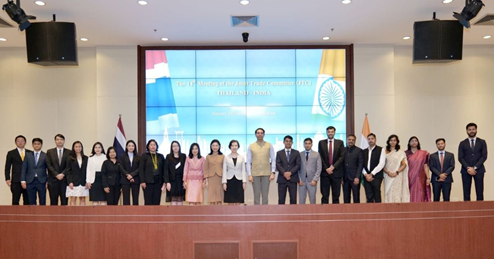
the investment case presented during the talks. The seventh India–Egypt Joint Trade
Committee, co-chaired by Goyal and Farid on 15 November, reviewed investment
opportunities in SCZONE and reaffirmed a bilateral trade target of US$12
billion. India’s Ministry of
Commerce and Industry said approximately 70 Indian companies operate in Egypt,
with investments of around US$5 billion. The discussions covered further
participation in automotive components, chemicals, textiles, food processing,
engineering, renewable energy and logistics.
The countries also agreed to establish a working group to examine the
framework for a possible preferential trade agreement, free trade agreement or
comprehensive economic partnership agreement. This would involve assessing
potential benefits across goods, services and investment.
For the industrial-zone proposal, land
selection and the development framework remain the next substantive issues. The
November meetings established continued government backing, while leaving
project-specific investment commitments and delivery timelines to subsequent
discussions.
Related News