



New Zealand Calls for Banning Substandard Vessels Based on 2023 Incident
Maritime investigators in New Zealand are calling for the banning of
substandard ships from the country’s water to avoid potential disasters. In the
wake of the release of the final report on the near catastrophic incidents
involving container ship Shiling, which twice had to be rescued and
towed back to port in 2023, the investigators as saying that New Zealand can
take a cue from Australia and ban substandard ships.
The Transport Accident Investigation Commission
(TAIC) contends that the Singapore-registered Shiling, which had a
notorious history of mechanical problems, should never have been allowed in New
Zealand waters. TAIC is calling on the
Ministry of Transport to pass a law giving Maritime NZ the authority to ban
certain ships from the country. The Australian Maritime Safety Authority
has the powers, which it has repeatedly utilized in banning ships deemed
unsafe..
“The Commission found that the Shiling had
a history of deficiencies and that it’s virtually certain the ship wasn’t
seaworthy while in New Zealand,” said Naveen Kozhuppakalam, TAIC’s Chief
Investigator of Accidents.
Owing to its troubled history, it was just a matter
of time before a serious incident could occur. It did not take long for the
294-meter (965-foot) long ship built at HD Hyundai Heavy Industries in 2005
with a capacity of 5,117 TEU to experience its first major incident. On April
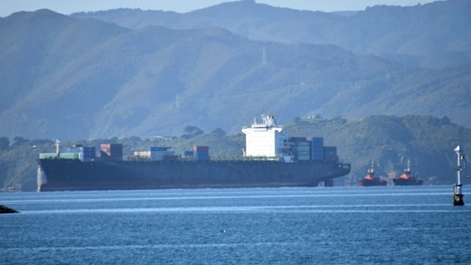
15, 2023, the Shiling was under pilotage at Wellington. Just
after initiating a turn into the Wellington Harbour entrance channel, the vessel suffered a blackout that
caused the main engine to stop...Maritime NZ issued a detention order
against the Shiling and carried out detailed inspections that
identified numerous deficiencies. For
the next 25 days, the boxship remained at Wellington undergoing repairs to its
generators and rectification of the deficiencies identified.
On May 10, the Shiling departed
Wellington bound for Singapore... The engine room bilges were confirmed as dry
before the ship departed with the chief engineer intending to begin pumping out
the tanks through the approved oily water separator once the ship was outside
New Zealand’s territorial waters.
Owing to adverse weather forecasts for the Tasman
Sea, the master decided to take shelter near the New Zealand coast and wait for
about 36 hours for the weather to abate. At about 2300 on May 11, the Shiling departed
the sheltered waters bound for Singapore. Because the engineers had been unable
to begin pumping out the oily water holding tanks, additional oily water that
had been produced while the ship remained in sheltered waters had filled the
engine room bilges and begun accumulating on the engine room tank top.
When the ship entered the Tasman Sea, it began to
roll, and the free water on the tank top entered the void under the main engine
sump, where three rubber diaphragms were located. The fact that all three rubber diaphragms deteriorated with age
allowed the bilge water to enter the lube-oil tank, causing the lube-oil pumps
to lose pressure and the main engine to stop. New Zealand’s inspectors later
concluded the diaphragms had gone uninspected for years.
Given the contamination of the lube oil tank, the
engineers were unable to restart the main engine. Without propulsion, the Shiling settled
beam-on to the waves and began rolling heavily. At 0828, the master radioed the
New Zealand Marine Operations Center to request towing assistance. At 1056, due
to continued heavy rolling, the master made a mayday call and a tow vessel
responded, managing to rescue the container ship to the sheltered waters of
Golden Bay and eventually back to Wellington.
For the next 45 days, the Shiling remained
at Wellington undergoing surveys and repairs to the main engine, further
repairs to the generators in connection with the first incident, and repairs to
several other systems identified as substandard. On July 7, the ship was
finally allowed to depart New Zealand for Singapore.
In both incidents, there were no injuries reported for the ship’s 24 crewmembers or environmental pollution. Following the release of the final report, TAIC has gone ahead to issue several recommendations, key of which is banning substandard vessels from New Zealand’s waters.
Related News