Hyderabad Start-ups Build Mini Satellite for ISRO’s PSLV Launch
India’s private space
sector continues to grow as two Hyderabad-based start-ups successfully prepare
a compact Earth observation satellite for launch. Built at a fraction of the
usual cost and time, this mini-satellite reflects India’s shift towards
affordable, indigenous, and high-tech space solutions. The mission also highlights strong collaboration
between start-ups, private aerospace facilities, and ISRO’s launch ecosystem,
strengthening India’s commercial and strategic space capabilities. Two Hyderabad start ups have completed
testing and integration of a 14 kg Earth observation mini-satellite in
Ahmedabad and shipped it to Sriharikota. The
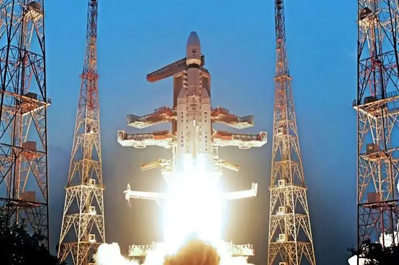
satellite will be launched as a co-passenger on ISRO’s PSLV mission in early
January 2026. The mission is called
MOI-1, developed by TakeMe2Space with electro-optics support from EON Space
Labs. It will operate in Low Earth
Orbit (LEO) at around 500 km altitude. The
satellite is designed for commercial and defence applications. Its projected operational life is 3-5 years.
Key Features of the Satellite
·
Weight: Only 14 kg (much lighter than conventional
100-200 kg satellites).
·
Camera Resolution: 9.2 metres with an 18.7 km swath.
·
Multispectral Imaging: Captures data in nine spectral bands.
·
Applications: Agriculture monitoring, urban mapping, ship
detection, construction tracking.
·
Onboard Computing: Processes data in orbit using AI instead of
sending raw images.
·
·
Integrated with MIRA,
a miniaturized space telescope developed by EON Space Labs.
·
Built and tested at
Azista BST Aerospace, Sanand GIDC, Ahmedabad.
·
Total build cost: ₹2.5
crore, about 40–70% cheaper than global equivalents.
·
Uses mostly
indigenously developed hardware, with only one foreign component (Nvidia
GPU).This marks a shift towards in-orbit data processing, reducing downlink
costs and making Earth observation more accessible.
·
Shows the rising role
of start-ups in India’s space economy. Supports
the vision of low-cost, high-performance satellites...Enhances dual-use
capabilities for both civilian and defense needs...Aligns with ISRO’s push to
open space launches to private players.
·
The satellite will
launch from Satish Dhawan Space Centre as one of about 18 co-passenger
payloads.

Related News