

Office Address
123/A, Miranda City Likaoli Prikano, Dope
Phone Number
+0989 7876 9865 9
+(090) 8765 86543 85
Email Address
info@example.com
example.mail@hum.com


123/A, Miranda City Likaoli Prikano, Dope
+0989 7876 9865 9
+(090) 8765 86543 85
info@example.com
example.mail@hum.com
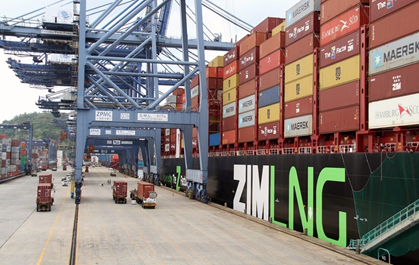
In a post on its official WeChat channel,
the State Council’s Hong Kong and Macau Affairs Office (HKMAO) branded the
court’s ruling “legally absurd, logically flawed, and utterly ridiculous.”
The statement was closely followed by an
announcement from Hong Kong-headquartered Hutchison Ports that Panama Ports
Company has launched arbitration proceedings against the Republic of Panama, seeking extensive damages. PPC said it
has continued to manage port operations at Balboa and Cristobal, but that the
Panamanian state had “declared and broadly deployed steps to take over the
operations of PPC”.
PPC said these steps included unexpected site visits and instructions
that the private company grant “unrestricted access to physical, commercial,
and intellectual property and information, as well as to employees”. These
demands were made as part of a port transition plan, PPC said, a plan it has
not had access to and that is based on an unpublished court ruling, which has
not come into effect.
HKMAO leaned heavily on the history of
smooth operation and co-operation between PPC and Panama state entities since
the concession was signed almost three decades ago, but its strong words for
the authorities in Panama contain clear messages intended to influence the
future of the nation’s ports sector.
“The fact that Panama has now ruled the contract unconstitutional
means that it can similarly rule other concession agreements approved at any
time in the future as unconstitutional. This sends a signal to international
investors that Panama is incapable of providing any protection for them,” the
statement said.
Earlier this week, the Panama Canal
Authority (ACP) launched the
prequalification stage of its tender for two massive projects: the
development of two new container terminals, one each on Panama’s Pacific and
Atlantic coasts, and construction of a 76 km gas pipeline across the country
with a marine terminal at each end. At a critical time for
Panama’s ports and logistics sector, HKMAO warned that Panama will “pay a heavy
price in terms of politics and economics” should it continue on its current
course. When President Trump took office in the US last year, Panama found itself thrust
into the centre of a geopolitical tussle between the US and China. The Trump administration alleged the
Panama Canal was under the “malign influence” of China, and while it avoids
mentioning the US by name, HKMAO draws a clear line between the court’s
decision and geopolitical events.
“It is clear to all that the
ruling reflects the Panamanian authorities' complete subservience and
obsequiousness to hegemony, “ it said.
For its part, PPC said it had made efforts over the past 12 months to
consult with Panamanian authorities to avoid disputes during what it called a
campaign by the Panamanian State targeting PPC and its concession.
PPC said the year “has been marked by a range of abrupt actions by the
Panamanian State culminating in grave and imminent further damage to PPC,”
while other similar port contracts have not attracted the same scrutiny.